
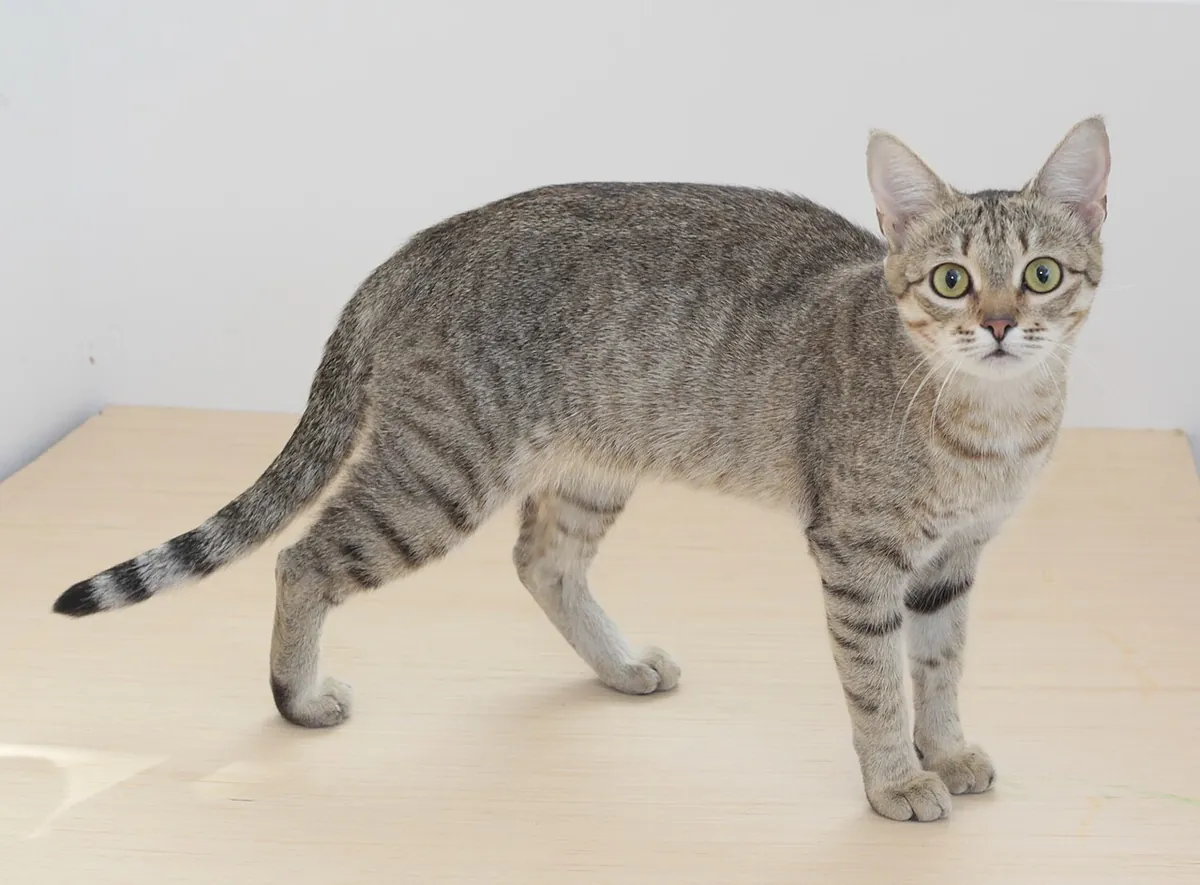
Kanaani
Also known as: Kanaani cat · Canaan cat · Canaani cat · Israeli cat
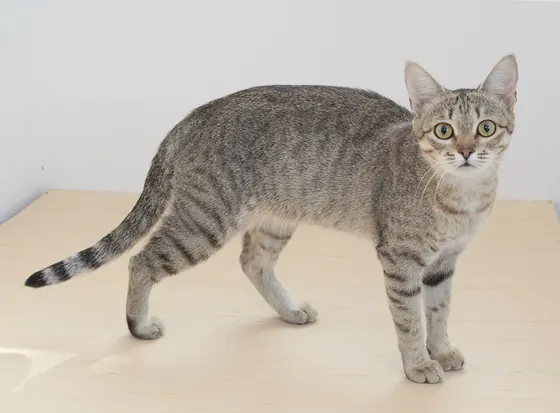
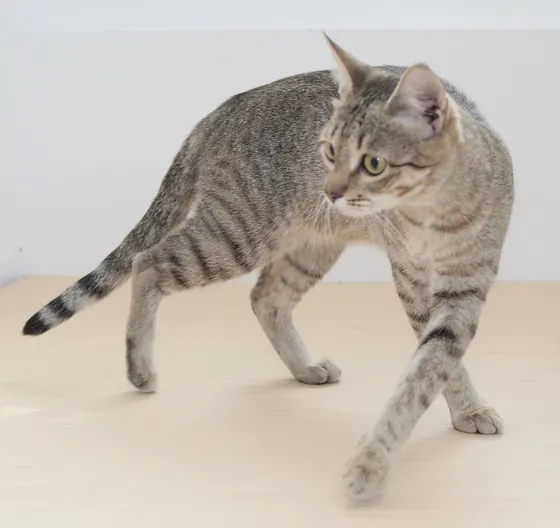
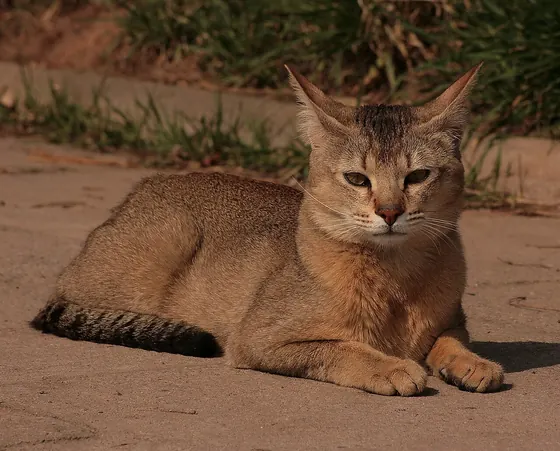
Photos: KanaaniStudies (CC BY-SA 4.0), via Wikimedia Commons.
Breed profile
* An estimate for Spain in 2026 (food, litter, vet and insurance), based on the size, grooming and health needs of the breed, not on measured costs of individual cats.
What it is like
It was created in Jerusalem in the 1990s by the German-Israeli artist Doris Pollatschek, who crossed domestic cats from Israel with the African wildcat (Felis lybica), the wild ancestor of all domestic cats. Its name comes from Canaan, the ancient name of the region. The WCF recognised it in 2008 and it was the first cat breed established in Israel; the programme later continued in Germany, but the breed was almost lost. In the 2020s a recovery programme in Brooklyn, New York, took up breeding again, and in 2026 there were only three registered Kanaani, among them Haifa, the female in its photos. TICA does not recognise it as a championship breed. It is a medium to large cat, slender and muscular, with large ears with tufts and the pale patch behind the ears typical of the wildcat. In character it is very active, playful and affectionate with its people, but also independent and an excellent hunter.
Temperament
Care
The coat looks after itself with a weekly brush. The demanding part is activity: it needs intense hunting play every day, plenty of vertical space, sturdy scratching posts and constant enrichment; when bored, it invents its own entertainment. It is not a good cat for a small flat or for first-time owners. Before considering one, check the regulations: in several European countries keeping wildcat hybrids is restricted.
Health
There are very few health data: the population is tiny and inbreeding is a real risk. In the early generations, its wildcat heritage can make it more skittish and less suited to life indoors. Otherwise, the care of any cat: vaccinations, parasite control, neutering and an annual check-up.
Fun facts
Its name comes from Canaan, the ancient name of the region between the Mediterranean and the Jordan.
In 2026 there were only three registered Kanaani in the world.
Behind its ears it has a pale patch, like a thumbprint, just like the African wildcat.
In the Netherlands, Flanders and Brussels it is forbidden to keep African wildcats and their hybrids up to the fourth generation.
Frequently asked questions
How big does a Kanaani get?
An adult Kanaani usually weighs 4–6.5 kg (9–14 lb) and stands about 28–33 cm (11–13 in) at the shoulder, which makes it a medium cat.
How long does a Kanaani live?
Its usual life expectancy is 12–15 years. Living indoors, being neutered and having regular vet check-ups make the biggest difference.
Is the Kanaani hypoallergenic?
No. It produces the usual cat allergens. If someone at home is allergic, spend time with the breed before deciding and talk to an allergist.
Is the Kanaani good with children?
It can be, with calm children who respect its space. As with any cat, teach children to let it walk away when it has had enough.
How much play does a Kanaani need?
As a guide, 45 min of play a day. Its activity score is 5 out of 5: short daily play sessions with a wand toy work better than one long one.
Similar breeds
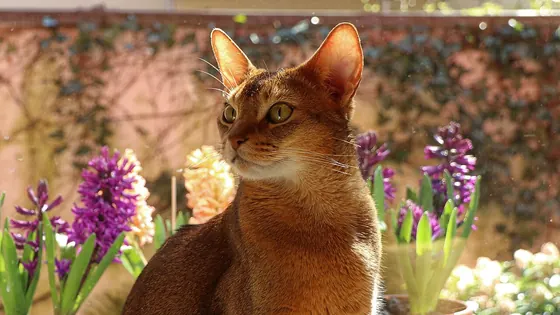
All breeds A to Z Cost calculator (Spanish) Food portions (Spanish)