
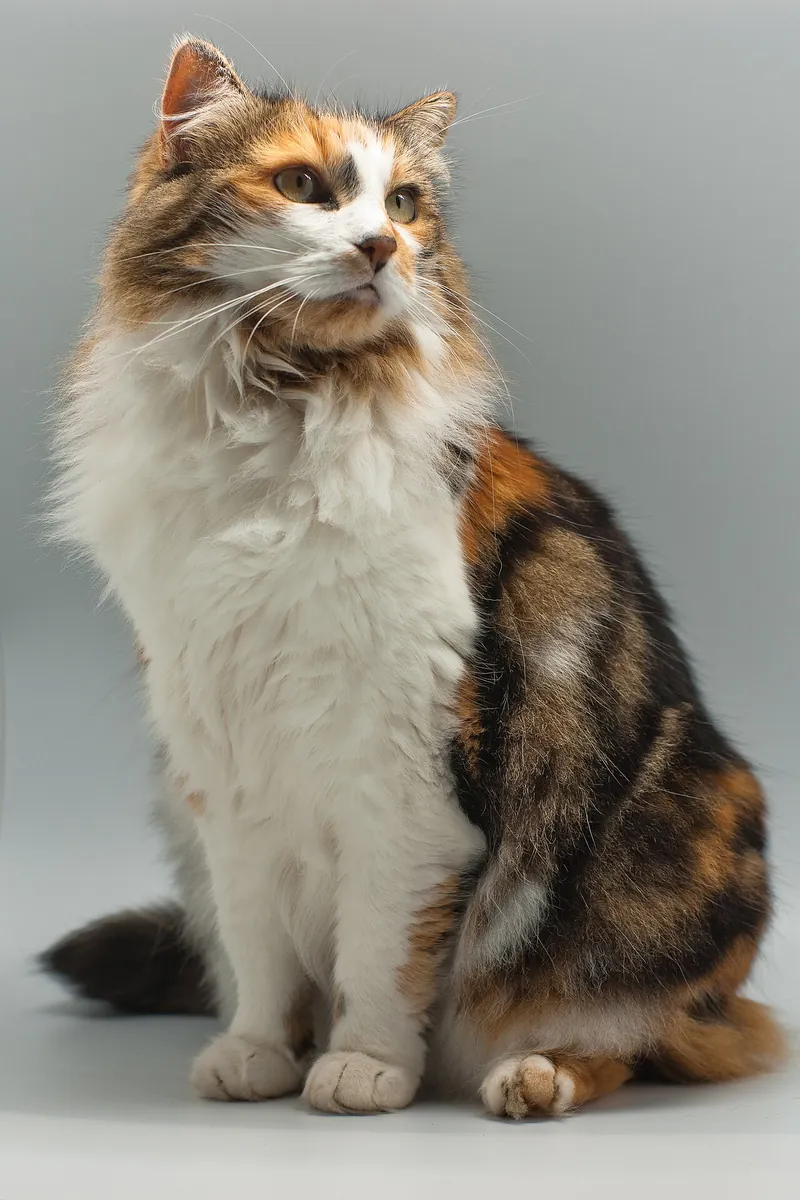
Norwegian Forest Cat
Also known as: Norwegian Forest · Wegie · Norsk skogkatt · Skogkatt · Norwegian cat
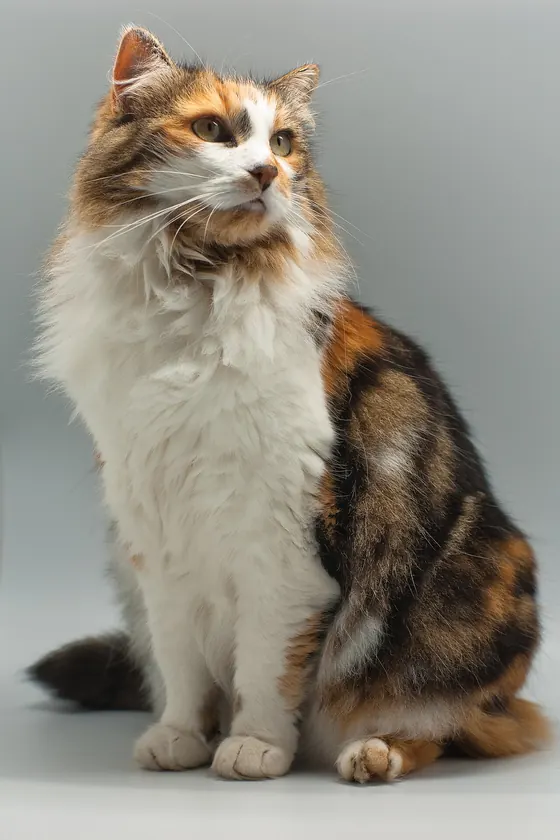
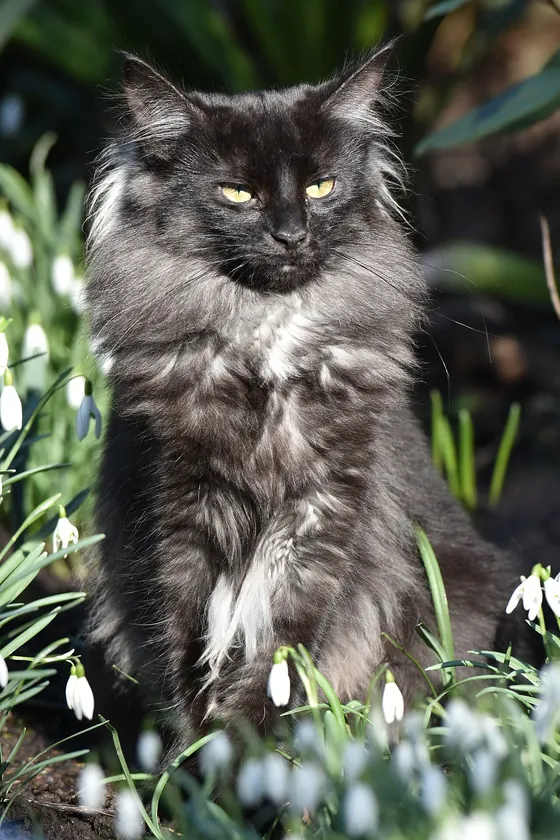
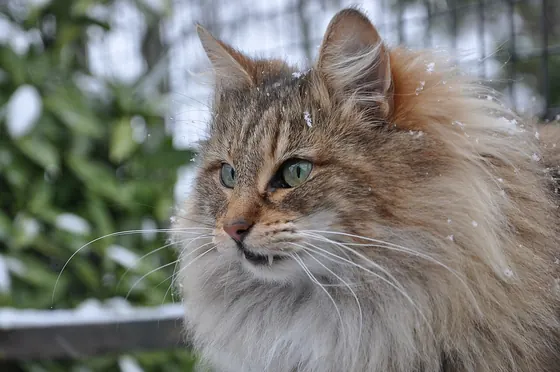
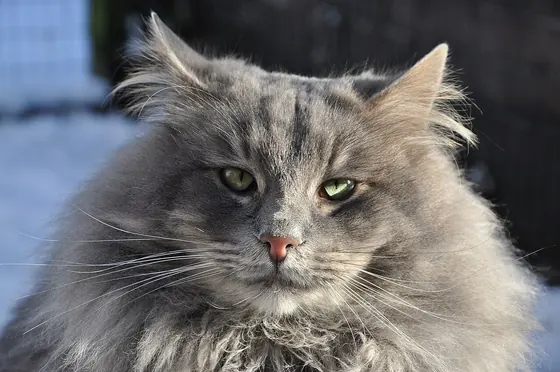
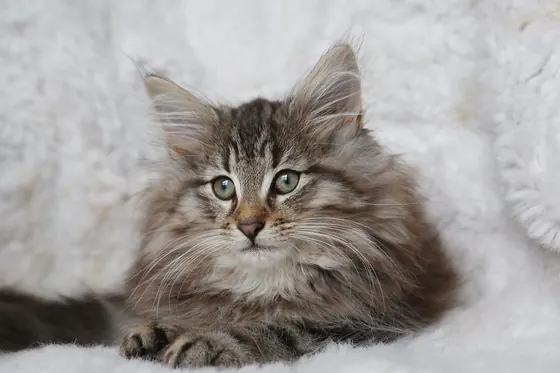
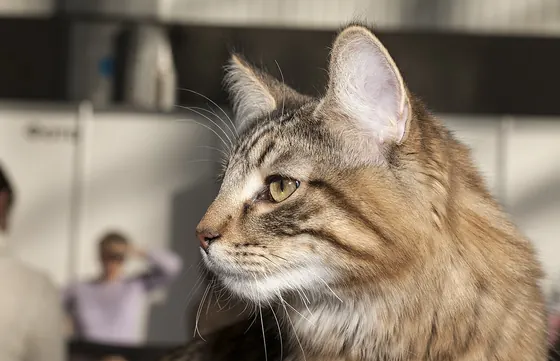
Photos: Ludovic Péron (CC BY-SA 3.0) · Dick Smit from Netherlands (CC BY-SA 2.0) · Dick Smit from Netherlands (CC BY 2.0) · Pieter & Renée Lanser from The Netherlands (CC BY 2.0) · Nickolas Titkov from Moscow, Russian Federation (CC BY-SA 2.0), via Wikimedia Commons.
Breed profile
* An estimate for Spain in 2026 (food, litter, vet and insurance), based on the size, grooming and health needs of the breed, not on measured costs of individual cats.
What it is like
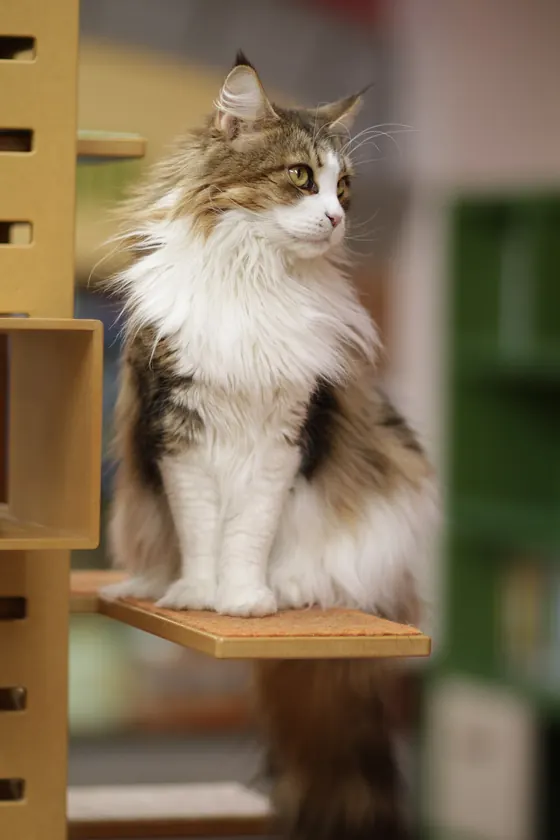
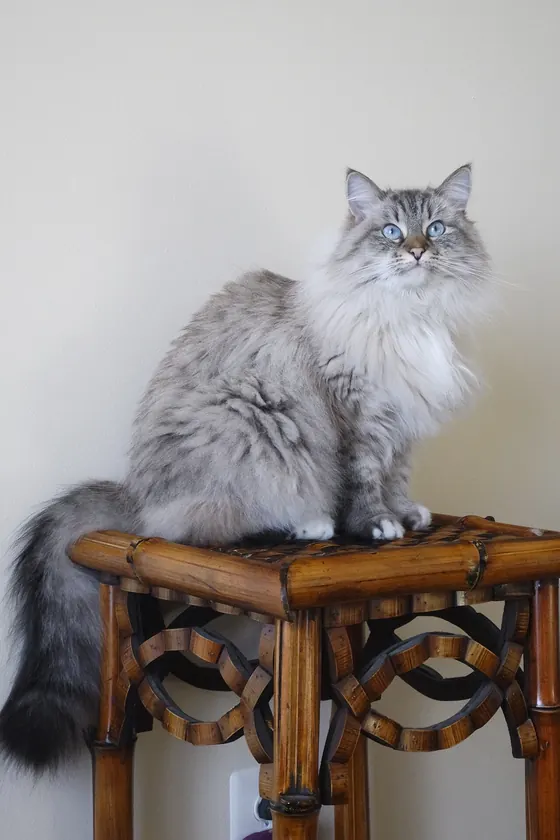
It is a natural cat of the Scandinavian forests, shaped over centuries by snowy winters: a water-repellent double coat, a thick ruff, tufts on the ears and between the toes, and strong claws for climbing rocks and tree trunks. After the Second World War it was almost diluted away by crosses with domestic cats, and a group of Norwegian breeders rescued it with a breeding programme; FIFe recognised it in 1977. It differs from the Maine Coon in its triangular head and straight profile, with no curve in the nose. In character it is affectionate but in its own way: sociable, not clingy and with a great need to climb high.
Coat colours and patterns
Colours and patterns that are common or accepted in this breed. Each page explains where the colour comes from, the myths around it and other breeds that have it.
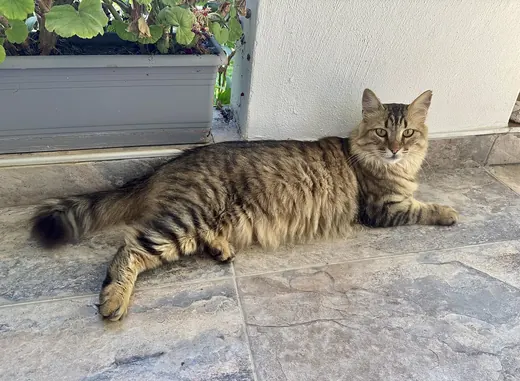 Tabby
Pattern · Tabby, Striped cat
Tabby
Pattern · Tabby, Striped cat
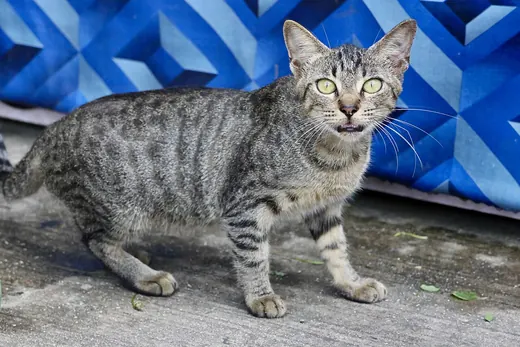 Mackerel tabby
Pattern · Mackerel tabby, Striped tabby
Mackerel tabby
Pattern · Mackerel tabby, Striped tabby
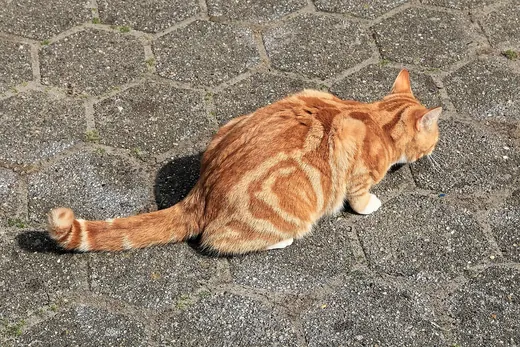 Classic tabby
Pattern · Classic tabby, Blotched tabby
Classic tabby
Pattern · Classic tabby, Blotched tabby
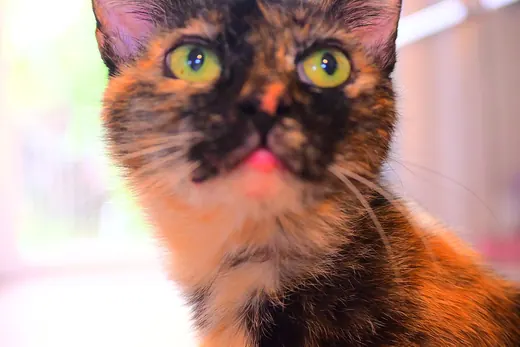 Tortoiseshell
Colour · Tortie, Tortoiseshell
Tortoiseshell
Colour · Tortie, Tortoiseshell
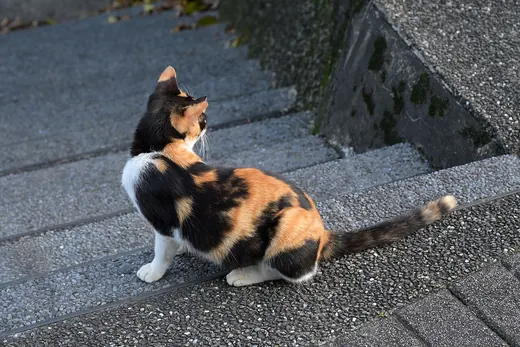 Calico or tricolour
Colour with white · Tricolour cat, Calico
Calico or tricolour
Colour with white · Tricolour cat, Calico
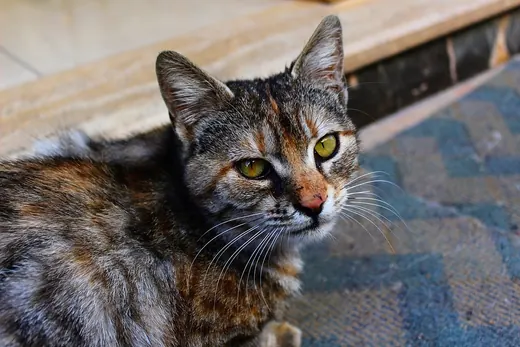 Torbie
Colour and pattern · Torbie, Tortie tabby
Torbie
Colour and pattern · Torbie, Tortie tabby
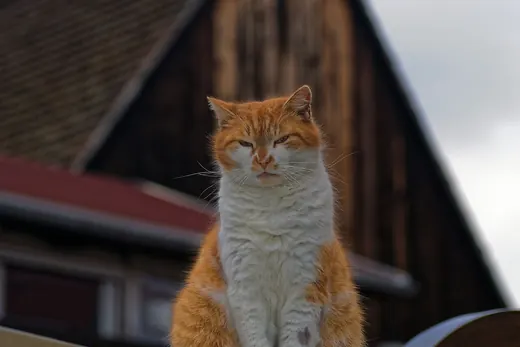 Bicolour
White spotting · Black and white cat, Ginger and white cat
Bicolour
White spotting · Black and white cat, Ginger and white cat
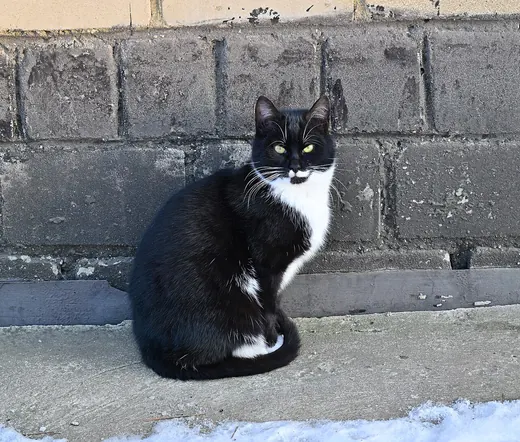 Tuxedo
White spotting · Tuxedo, Black and white cat
Tuxedo
White spotting · Tuxedo, Black and white cat
And also:
All cat coat colours and patterns →
Temperament
Care
Weekly combing with a long-toothed comb, and daily during the spring moult, when it drops its undercoat all at once. Outside the moult, the top coat tangles little. Height is essential: floor-to-ceiling cat trees, wall shelves, bookcases. It adapts to a flat if it has somewhere to climb; with a balcony, always use netting. It matures late, at around 4–5 years, and gains weight easily if it does not get enough exercise.
Health
Glycogen storage disease type IV (GSD IV), an inherited metabolic disease with a DNA test (GBE1 gene): affected kittens die at birth or develop severe muscle weakness in their first months. Also pyruvate kinase deficiency (PK-def, testable), HCM (echocardiograms for breeding cats) and hip dysplasia. Ask for the parents' GSD IV and PK-def tests.
Health problems to watch for
These are described more often in this breed. It does not mean a Norwegian Forest Cat will have them, nor that a moggy is free of them: they are worth knowing about and discussing with your vet.
Fun facts
In Norse mythology, the goddess Freya rode in a chariot drawn by two cats; some identify them with this forest cat.
The first breed club was founded in Oslo in 1938, but the war held back breeding for decades.
A male called Pans Truls was one of the founders of the modern breeding programme in the 1970s.
Thanks to its strong claws, it is said to climb down trees head first, something most cats do not do.
Frequently asked questions
How big does a Norwegian Forest Cat get?
An adult Norwegian Forest Cat usually weighs 3.5–9 kg (8–20 lb) and stands about 25–35 cm (10–14 in) at the shoulder, which makes it an extra large cat.
How long does a Norwegian Forest Cat live?
Its usual life expectancy is 14–16 years. Living indoors, being neutered and having regular vet check-ups make the biggest difference.
Is the Norwegian Forest Cat hypoallergenic?
No. It produces the usual cat allergens. If someone at home is allergic, spend time with the breed before deciding and talk to an allergist.
Is the Norwegian Forest Cat good with children?
Usually yes: it tends to be patient and sociable with children. As with any cat, teach children to let it walk away when it has had enough.
How much play does a Norwegian Forest Cat need?
As a guide, 30 min of play a day. Its activity score is 3 out of 5: short daily play sessions with a wand toy work better than one long one.
Similar breeds
All breeds A to Z Cost calculator (Spanish) Food portions (Spanish)