
Calico cat
Also called: Tricolour cat, Calico, Tortoiseshell and white, Mi-ke, Three-coloured cat.
White, black and orange in large, well-defined patches: the tricolour cat. She is a tortoiseshell with white patches, and so shares its genetics: almost all are female. In Japan, tricolour (mi-ke) is the lucky colour.
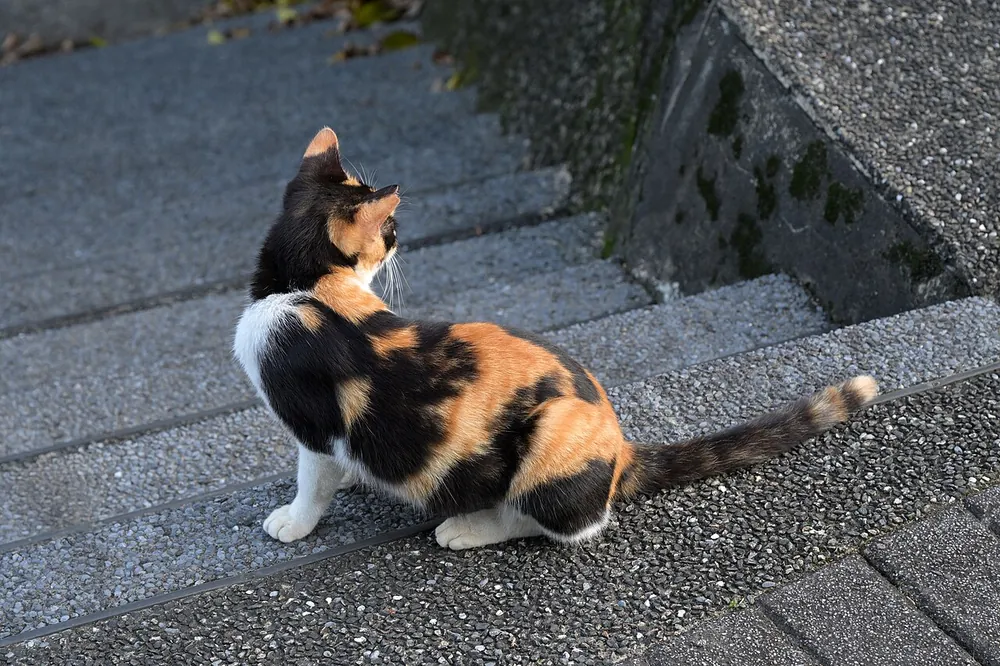
What it looks like
Large areas of white (especially on the belly, chest, legs and face) and clean patches of black and orange on the back and head. The more white she has, the larger and cleaner the colour patches tend to be. The dilute version, blue, cream and white, is called a dilute calico.
The genetics, made simple
It combines two things. On one hand, the black and orange of the tortoiseshell, which depend on the X chromosome: two Xs are needed, one with the orange gene and one without, and each cell switches one off at random. On the other, the white spotting gene (from the KIT family), which stops pigment cells reaching some areas. Because those cells migrate less and spread out earlier, the colour patches end up larger than in a tortoiseshell. Male calicos, like male torties, are usually XXY: a figure of around one in every 3,000 calicos is often quoted, although it is only approximate.
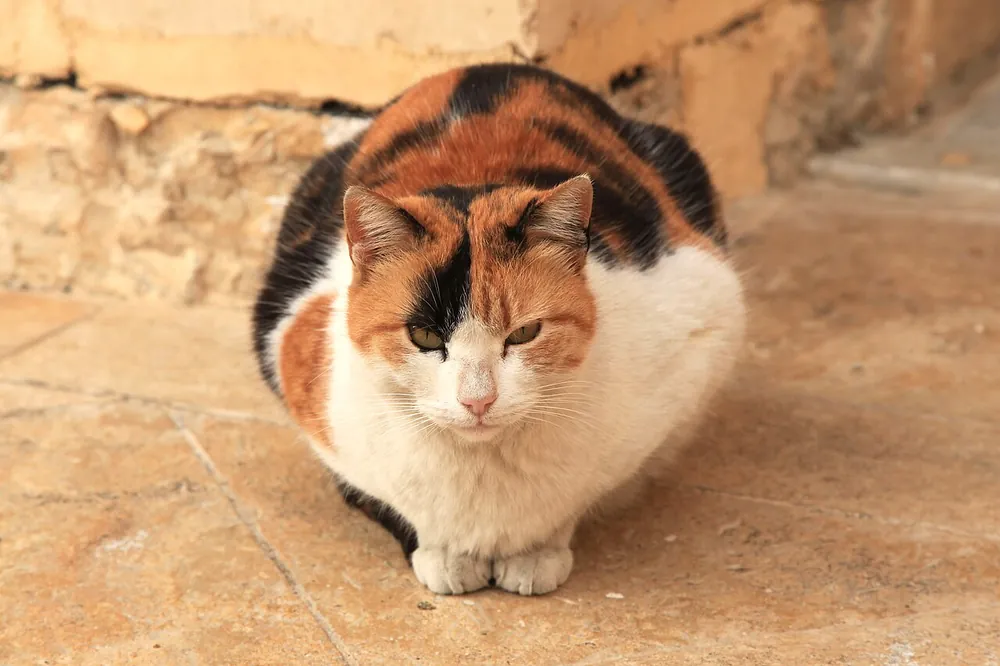
Myths and what science says
The lucky cat
The maneki-neko, the Japanese cat that beckons with its paw, is very often shown as a tricolour, and it is said that Japanese sailors prized the rare tricolour males as good luck charms. In the United States, the calico is the official state cat of Maryland.
“Calicos are more temperamental”
They get the same reputation as tortoiseshells. The only serious owner survey found a small effect that cannot predict the temperament of any individual cat.
Fun facts
- “Calico” comes from a printed cotton fabric originally from Calicut, in India.
- A calico can have kittens of almost any colour, depending on the father.
- The maneki-neko is often said to depict a tricolour Japanese Bobtail.
Does it affect its health?
The colour does not cause disease in females. White areas with pink skin (ears, nose) can burn in the sun. Male calicos are usually sterile because of their chromosomal anomaly.
Breeds where it appears or is typical
This coat turns up in plenty of moggies. These are breeds where it is common, characteristic or accepted; under each one, the colours the breed comes in.
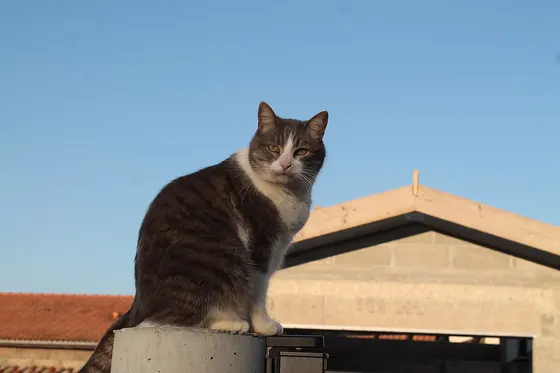 European Shorthair
Shorthair · Europe
Almost all: tabby, black, white, bicolour, tortoiseshell, red…; no colourpoint, chocolate or lilac in pedigree cats
European Shorthair
Shorthair · Europe
Almost all: tabby, black, white, bicolour, tortoiseshell, red…; no colourpoint, chocolate or lilac in pedigree cats
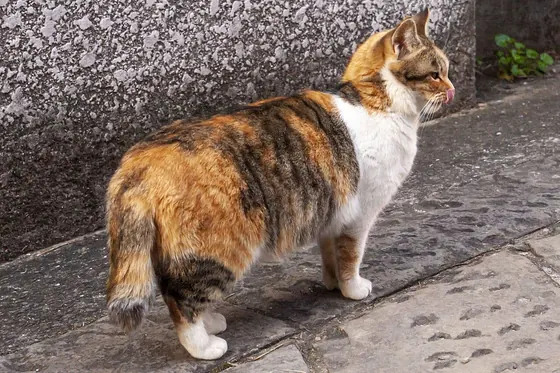 Japanese Bobtail
Tails & ears · Japan
All; the classic is the mi-ke tricolour (white, red and black)
Japanese Bobtail
Tails & ears · Japan
All; the classic is the mi-ke tricolour (white, red and black)
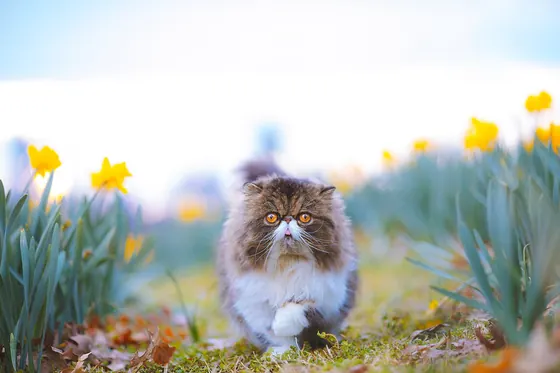 Persian
 · Iran / United Kingdom
Almost all: white, black, blue, cream, chinchilla, golden, bicolour, tortoiseshell…
Persian
Persian · Iran / United Kingdom
Almost all: white, black, blue, cream, chinchilla, golden, bicolour, tortoiseshell…
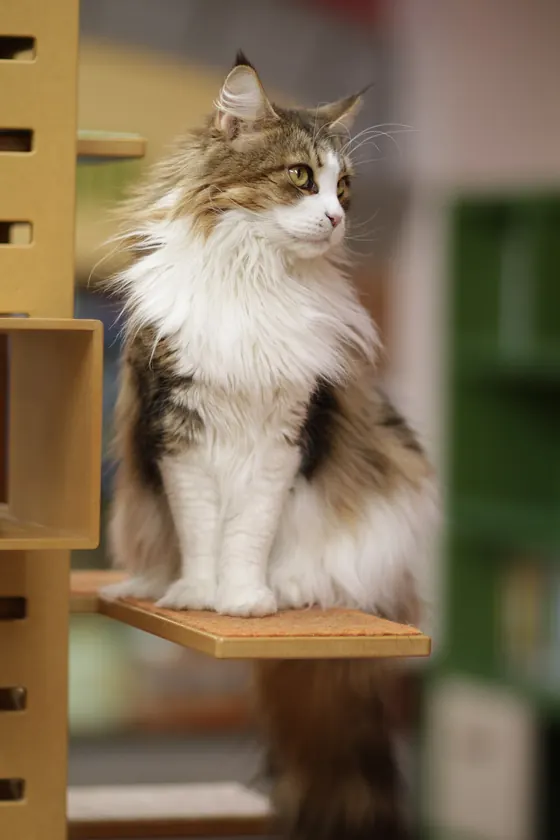 Maine Coon
Forest · United States
Almost all; the classic is brown tabby. No colourpoint in most registries
Maine Coon
Forest · United States
Almost all; the classic is brown tabby. No colourpoint in most registries
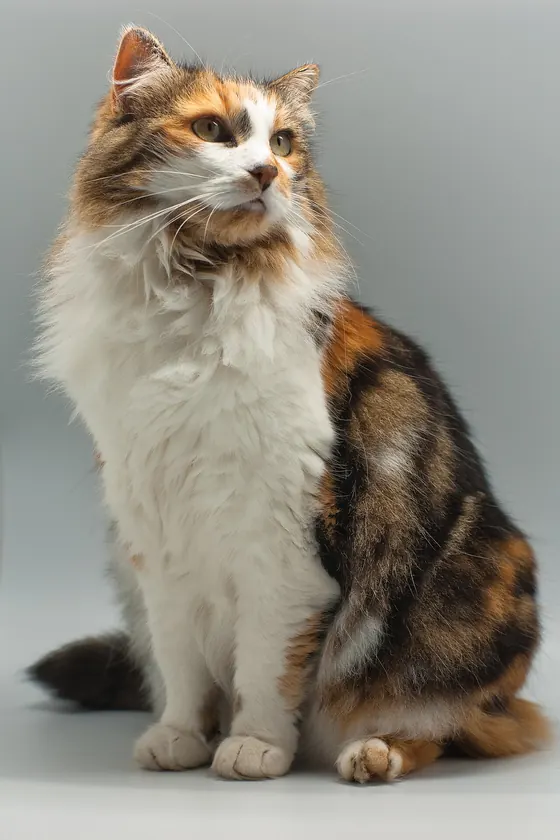 Norwegian Forest Cat
Forest · Norway
Almost all except colourpoint, chocolate, lilac, cinnamon and fawn; lots of white and tabby
Norwegian Forest Cat
Forest · Norway
Almost all except colourpoint, chocolate, lilac, cinnamon and fawn; lots of white and tabby
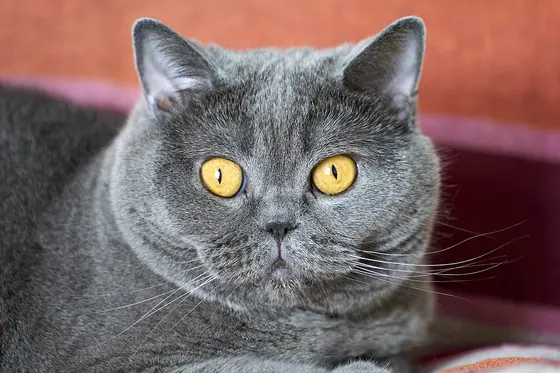 British Shorthair
Shorthair · United Kingdom
Blue (the classic), black, white, cream, lilac, chocolate, silver, golden, bicolours, colourpoint…
British Shorthair
Shorthair · United Kingdom
Blue (the classic), black, white, cream, lilac, chocolate, silver, golden, bicolours, colourpoint…
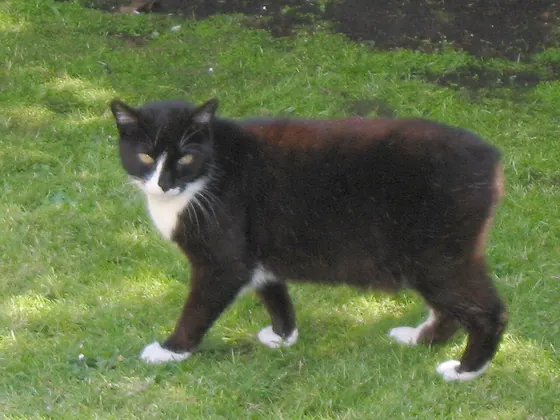 Manx
Tails & ears · Isle of Man
All
Manx
Tails & ears · Isle of Man
All
Frequently asked questions
Are there male calico cats?
Yes, but very few: a figure of roughly one in every 3,000 calicos is often quoted. They usually have two Xs and a Y, and are almost always sterile.
What is the difference between calico and tortoiseshell?
A calico has large white areas and clean patches of black and orange. A tortoiseshell has little or no white, with the black and orange jumbled together.
Is calico a breed?
No. It is a colour that appears in many breeds and, above all, in ordinary domestic cats.
What is a dilute calico?
The same cat in pastel tones: blue, cream and white, because of the dilution gene.
Educational content from Michipedia. The genetics of coat colour are simplified so they are easy to follow; colour tells you nothing about the personality of a particular cat.