
Japanese Bobtail
Also known as: Japanese Bobtail cat · Japanese cat · Lucky cat · Maneki neko · Longhaired Japanese Bobtail · Mi-ke cat
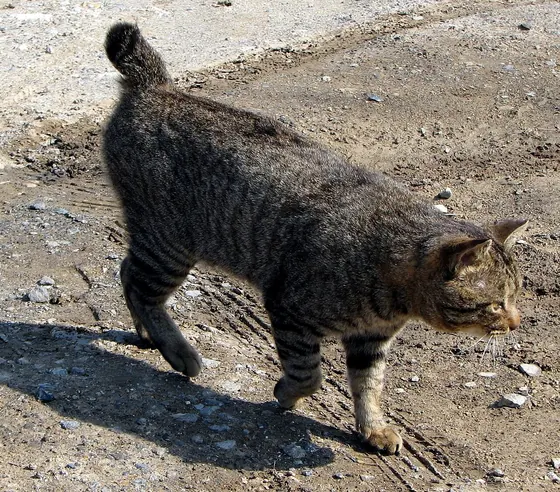
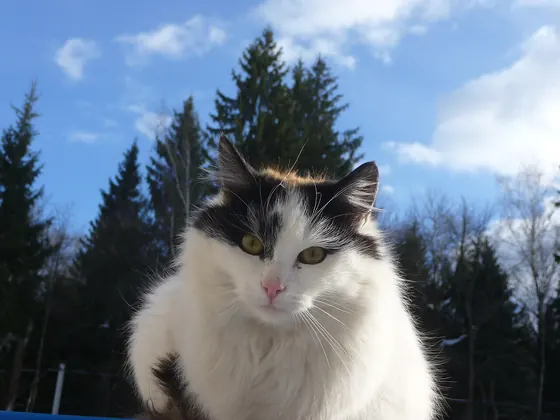
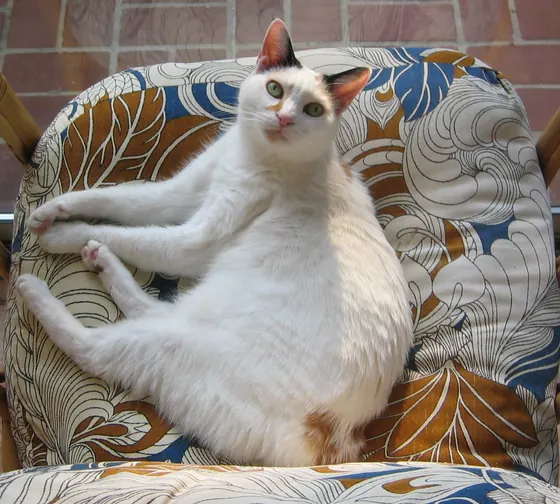
Photos: Marine-Blue (CC0) · Linrx81 (CC BY-SA 4.0) · Valter Wei (CC BY-SA 2.0) · Autor desconocido (CC BY-SA 3.0) · Speznas35 (CC BY-SA 3.0) · jonny-mt (CC BY-SA 3.0), via Wikimedia Commons.
Breed profile
* An estimate for Spain in 2026 (food, litter, vet and insurance), based on the size, grooming and health needs of the breed, not on measured costs of individual cats.
Varieties
Two coat varieties
What it is like
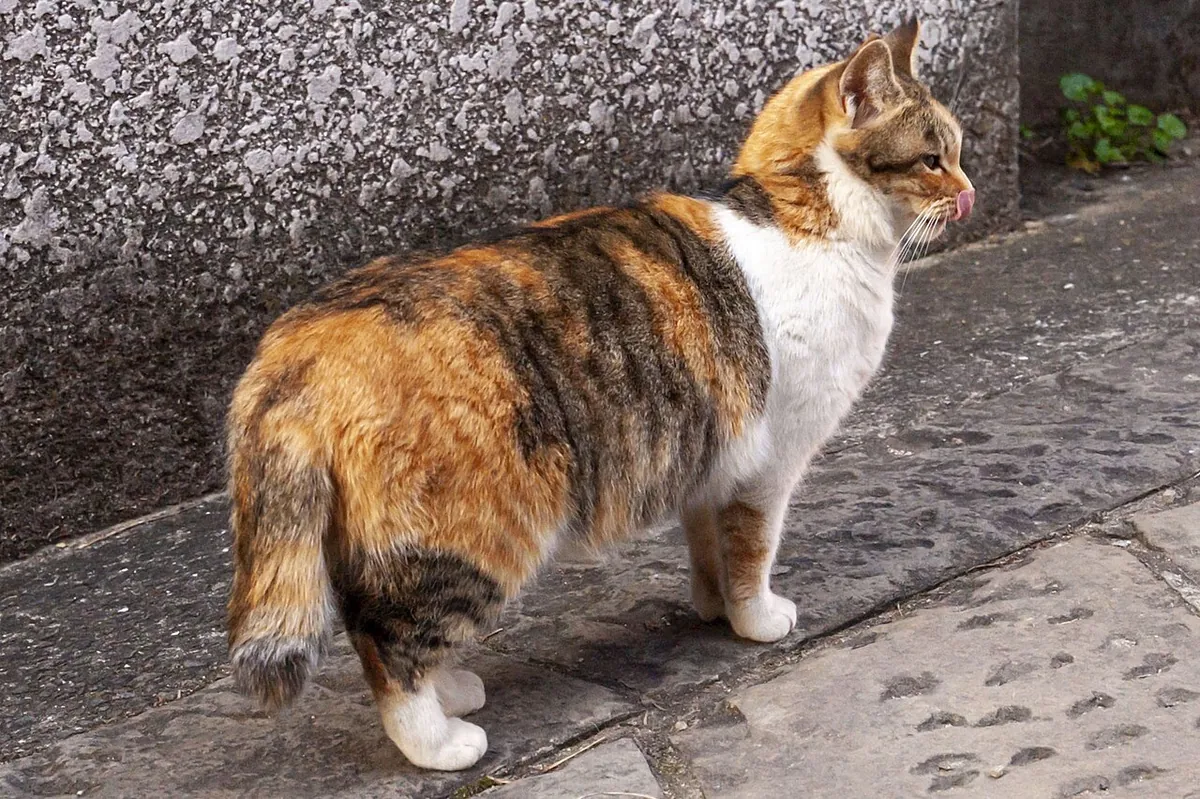
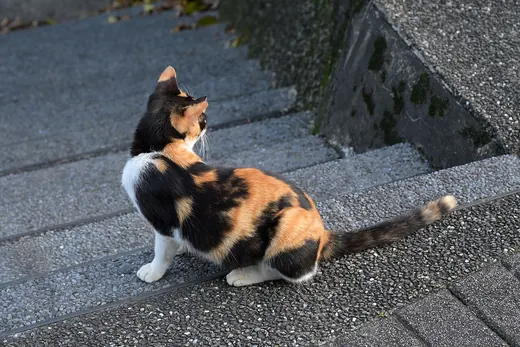
It reached Japan from China or Korea at least a thousand years ago and is part of the country's art and folklore: many maneki-neko figures, the cat that beckons with its paw and brings good luck, depict a tricolour bobtail. Its short, pom-pom tail is caused by a recessive gene that, unlike the Manx's, is not associated with spinal problems. Every tail is different. It reached the United States in 1968 thanks to Elizabeth Freret. It is an active, clever, very sociable and talkative cat, with a sing-song voice. It learns fetch games and loves water.
Coat colours and patterns
Colours and patterns that are common or accepted in this breed. Each page explains where the colour comes from, the myths around it and other breeds that have it.
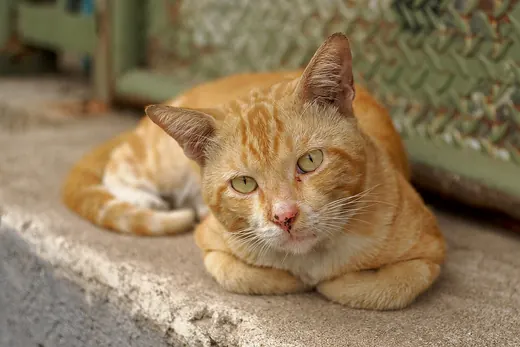
All cat coat colours and patterns →
Temperament
Care
Easy coat: weekly brushing, a little more for the longhaired variety. Do not touch or handle the tail roughly, as it is sensitive. It needs daily play and company. It gets on well with children, dogs and other cats, and adapts well to a flat if it has somewhere to climb. It learns to walk on a harness and to fetch toys, and enjoys clicker training. It copes badly with long periods alone: it is better with another cat.
Health
A very healthy breed: the short-tail gene is not associated with spinal malformations as in the Manx. It has no well-described inherited diseases of its own. Routine check-ups and dental care. Its coat, with little undercoat, makes it somewhat more sensitive to cold than other cats. Annual check-ups and vaccinations up to date.
Fun facts
According to tradition, a 1602 edict required the cats of Kyoto to be set free to protect silkworms from mice.
The maneki-neko, the lucky cat seen in shops, usually depicts a tricolour Japanese Bobtail.
No two tails are alike: each has its own kinks and curves.
The CFA recognised it for championship in 1976.
Frequently asked questions
How big does a Japanese Bobtail get?
An adult Japanese Bobtail usually weighs 2.5–4.5 kg (6–10 lb) and stands about 20–25 cm (8–10 in) at the shoulder, which makes it a small cat.
How long does a Japanese Bobtail live?
Its usual life expectancy is 14–16 years. Living indoors, being neutered and having regular vet check-ups make the biggest difference.
Is the Japanese Bobtail hypoallergenic?
No. It produces the usual cat allergens. If someone at home is allergic, spend time with the breed before deciding and talk to an allergist.
Is the Japanese Bobtail good with children?
Usually yes: it tends to be patient and sociable with children. As with any cat, teach children to let it walk away when it has had enough.
How much play does a Japanese Bobtail need?
As a guide, 45 min of play a day. Its activity score is 5 out of 5: short daily play sessions with a wand toy work better than one long one.
Similar breeds
All breeds A to Z Cost calculator (Spanish) Food portions (Spanish)