
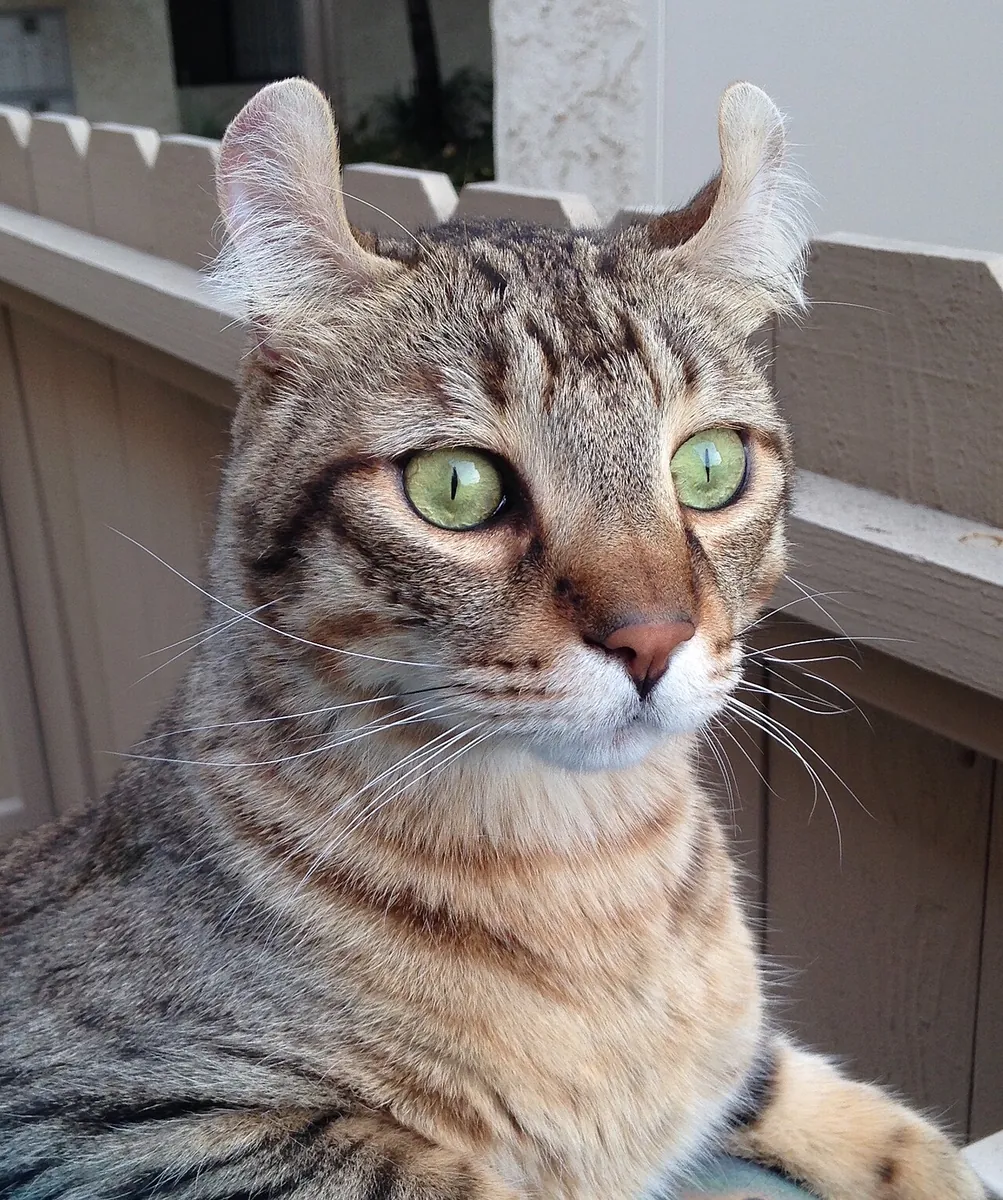
Highlander
Also known as: Highland Lynx · Highlander Shorthair · Highlander cat · Highlander Longhair
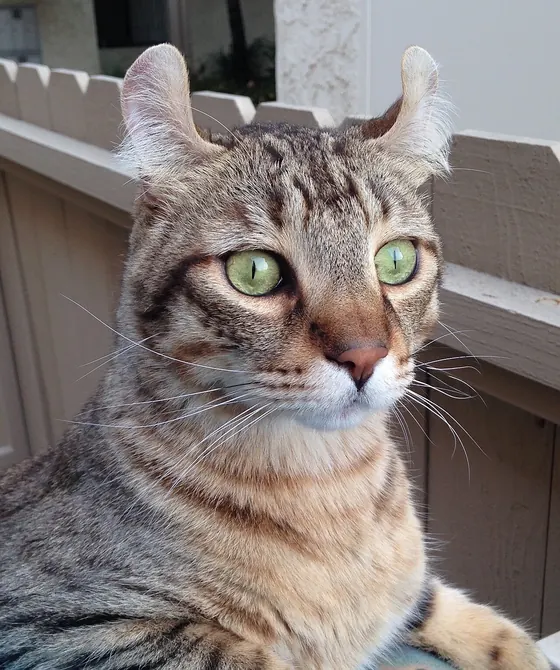
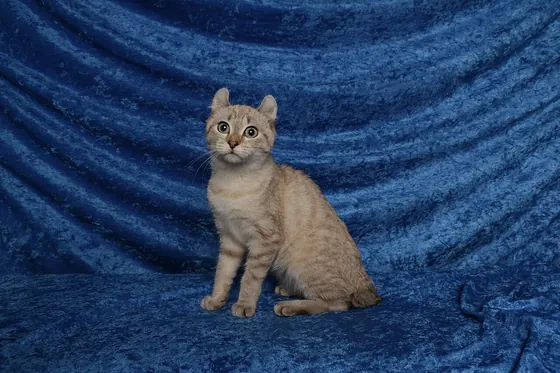
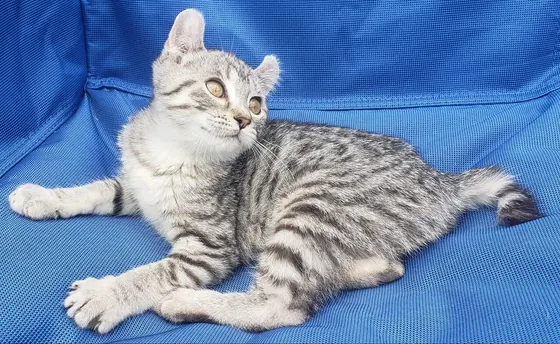
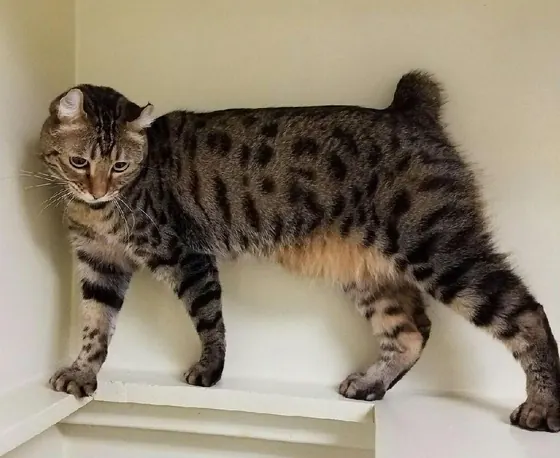
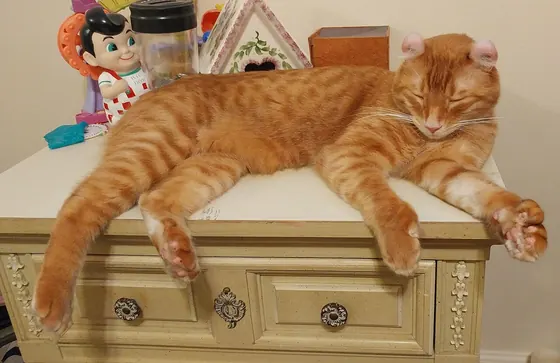
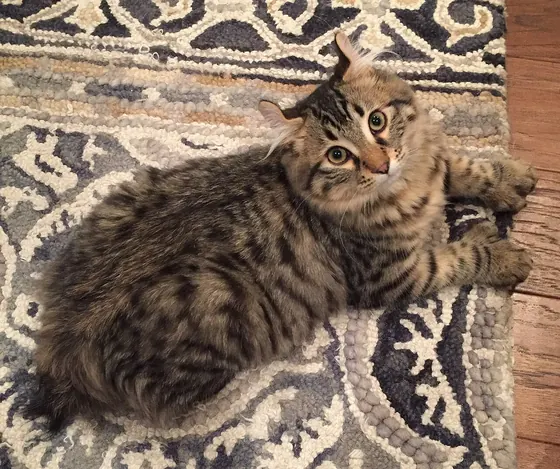
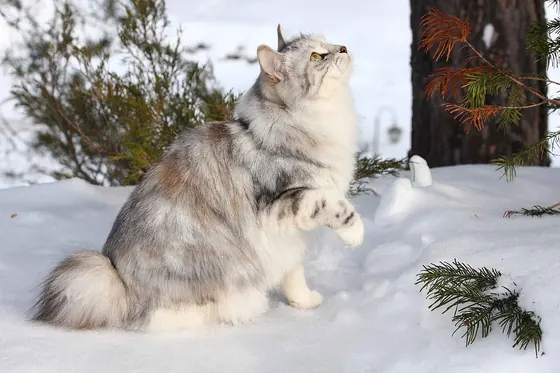
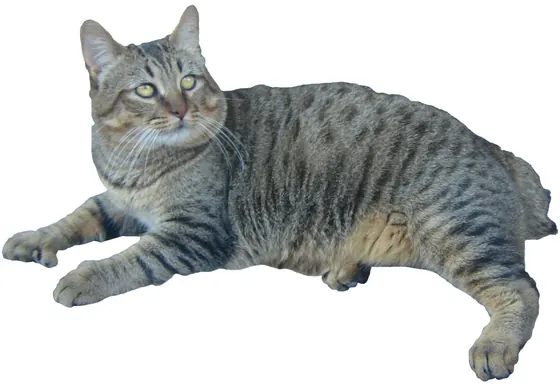
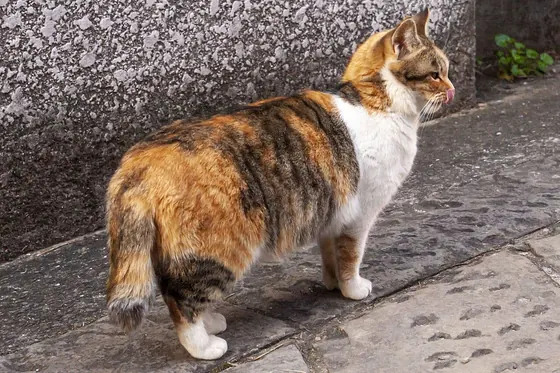
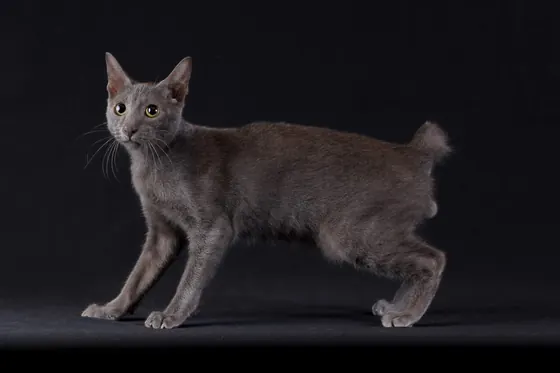
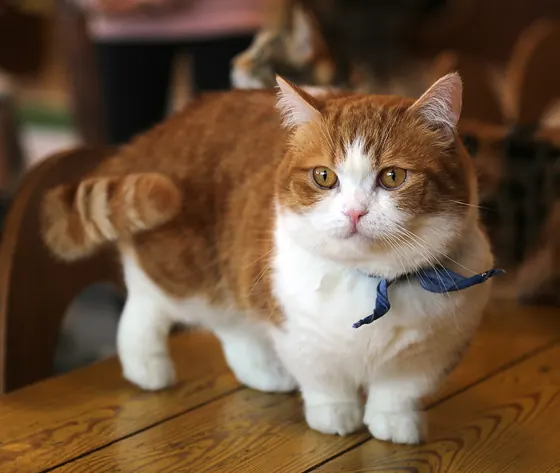
Photos: TAnthony (CC BY-SA 4.0) · Hawaiihudec (CC BY-SA 4.0) · DigitalDirt (CC BY-SA 4.0) · ChristinaHall (CC BY-SA 4.0), via Wikimedia Commons.
Breed profile
* An estimate for Spain in 2026 (food, litter, vet and insurance), based on the size, grooming and health needs of the breed, not on measured costs of individual cats.
What it is like
It was born in the United States from crossing two experimental breeds, the Desert Lynx and the Jungle Curl, to add the curled ears of the latter to the lynx look of the former. Work to fix it began in 2004, the name Highlander was adopted in late 2005, and in May 2008 TICA admitted it as a preliminary new breed; in 2016 it moved up to advanced new breed and in 2022 the ACFA accepted it for championship. It is a large, very muscular cat with a short or bobbed tail, a long sloping forehead, a blunt muzzle, a wide nose and upright ears that curl slightly backwards. Despite its wild-cat look, it is very people-oriented: playful, trusting and active.
Temperament
Care
Weekly brushing for the shorthair and twice a week for the semi-longhair. It needs plenty of play and room to jump: tall, well-anchored scratching posts, because it is heavy. Clean the ears gently, without forcing the curl, which is delicate in kittens. If it is polydactyl, check the claws on the extra toes, which can grow into the pad.
Health
It is a young breed and there are no large health studies. The spinal problems of the Manx have not been described, but the vet should check the kitten's tail and gait. Many cats are polydactyl, which does not usually cause problems except with the claws. Watch its weight: a large, overweight cat puts a lot of strain on its joints.
Fun facts
It was originally called the Highland Lynx; the name Highlander was adopted in late 2005.
Many are polydactyl, with extra toes, although this is penalised at shows.
TICA distinguishes the shorthaired Highlander Shorthair from the plain Highlander, which has a longer coat.
Its backward-curling ears are inherited from the Jungle Curl.
Frequently asked questions
How big does a Highlander get?
An adult Highlander usually weighs 4.5–9 kg (10–20 lb) and stands about 25–33 cm (10–13 in) at the shoulder, which makes it a large cat.
How long does a Highlander live?
Its usual life expectancy is 12–15 years. Living indoors, being neutered and having regular vet check-ups make the biggest difference.
Is the Highlander hypoallergenic?
No. It produces the usual cat allergens. If someone at home is allergic, spend time with the breed before deciding and talk to an allergist.
Is the Highlander good with children?
Usually yes: it tends to be patient and sociable with children. As with any cat, teach children to let it walk away when it has had enough.
How much play does a Highlander need?
As a guide, 45 min of play a day. Its activity score is 5 out of 5: short daily play sessions with a wand toy work better than one long one.
Similar breeds
All breeds A to Z Cost calculator (Spanish) Food portions (Spanish)