
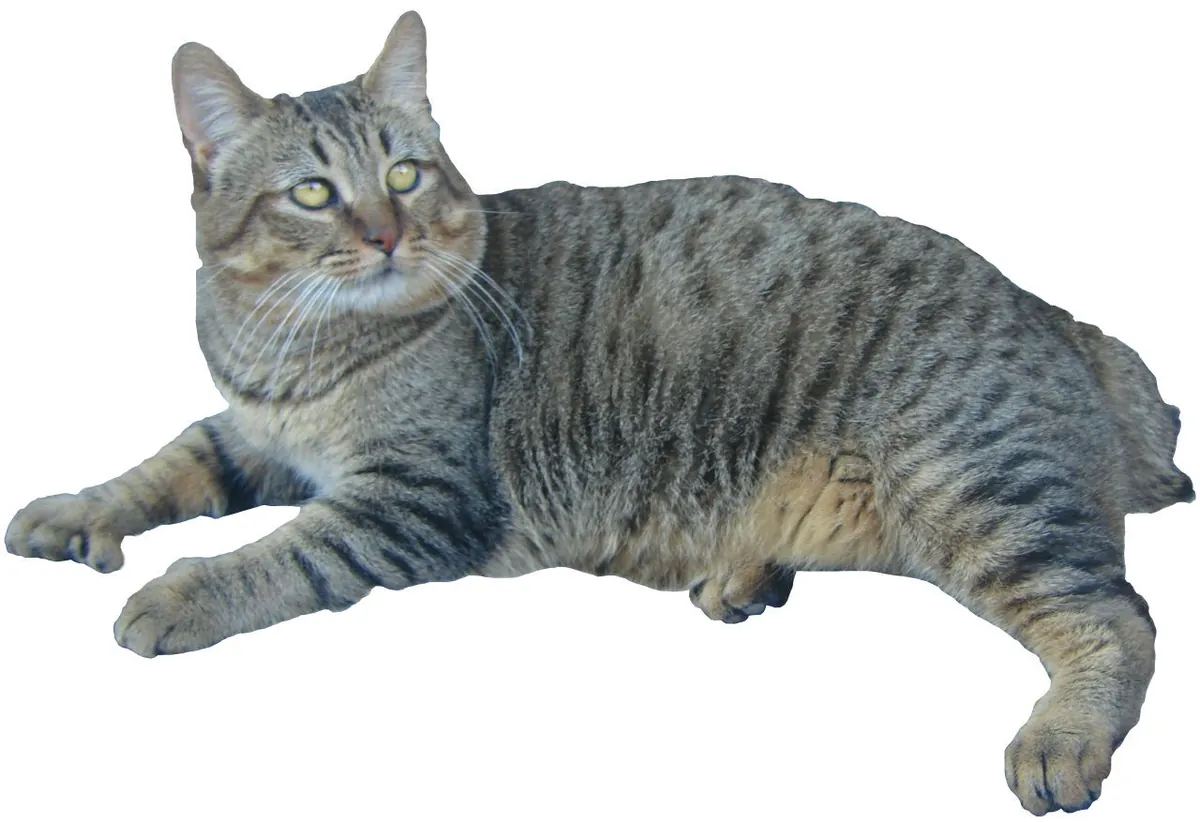
Pixie-bob
Also known as: Pixie bob · Pixiebob · Pixie-bob cat · Lynx cat · Domestic bobcat
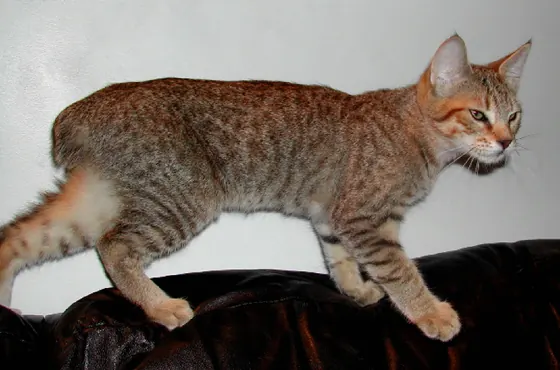
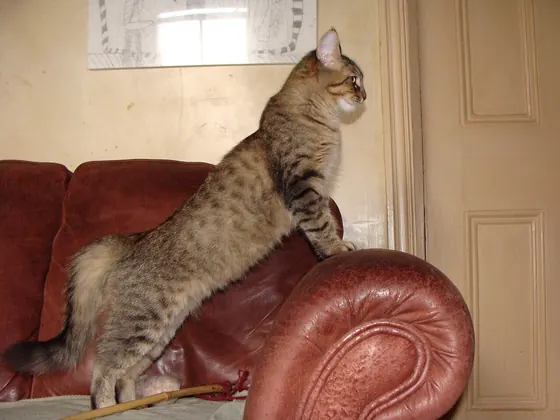
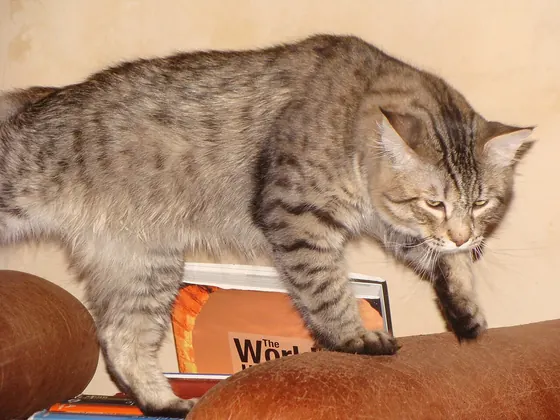
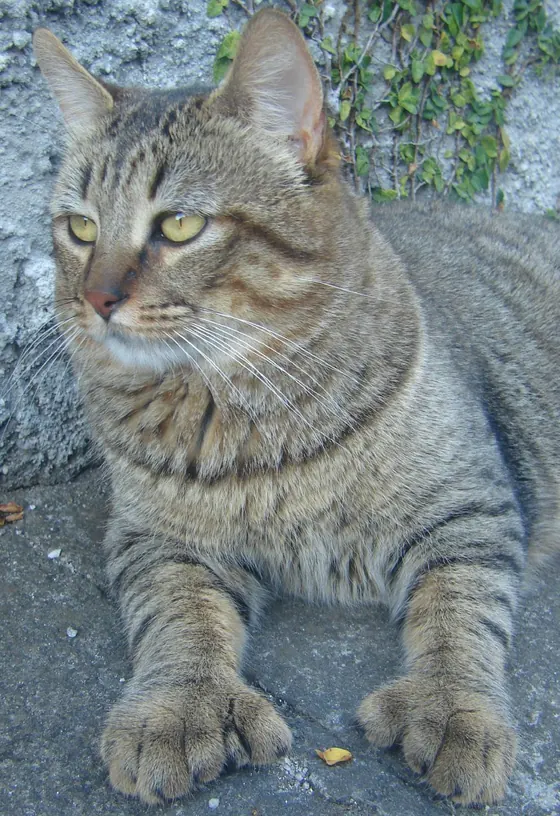
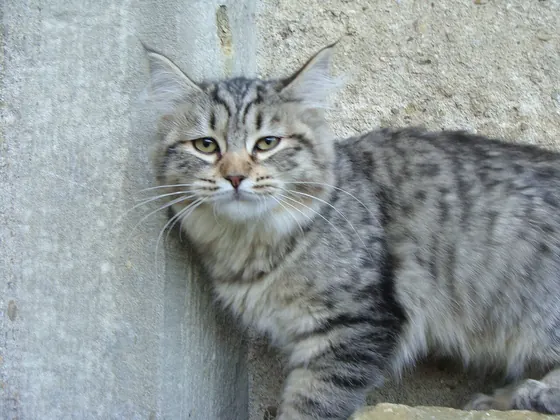
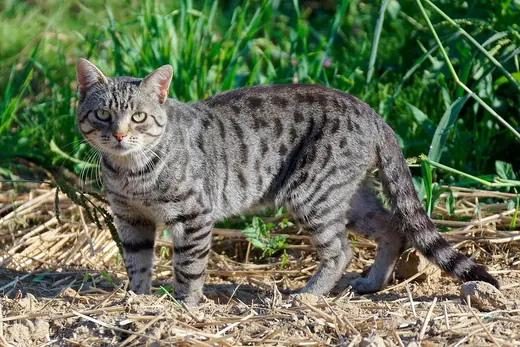
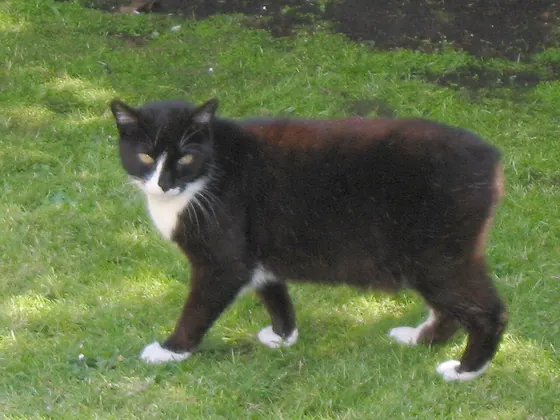
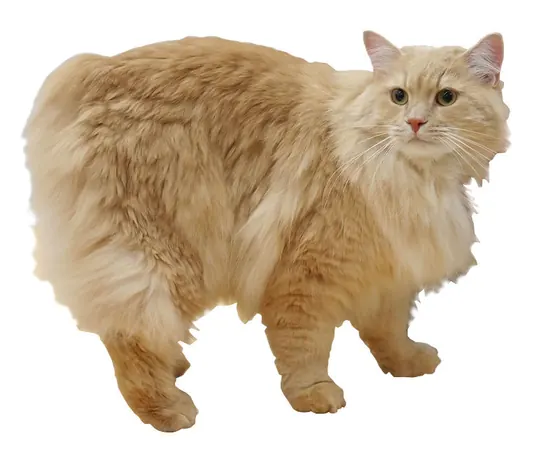
Photos: Desaix83, d'après le travail de Simone Johnsson (CC BY-SA 2.5) · en:User:AristotlesPride (Public domain) · Gertrud Keazor (CC BY-SA 3.0) · Simone Johnsson from Curitiba, Brazil (CC BY-SA 2.0), via Wikimedia Commons.
Breed profile
* An estimate for Spain in 2026 (food, litter, vet and insurance), based on the size, grooming and health needs of the breed, not on measured costs of individual cats.
What it is like
It was born in the north-western United States in the mid-1980s, when the breeder Carol Ann Brewer put a large short-tailed male, Keba, together with a neighbourhood female. The litter included Pixie, a lynx-faced female kitten who gave the breed its name. For years it was said to carry bobcat blood, but genetic studies have found no trace of it: it is a domestic cat. It has a short tail, a sturdy body, a lynx-like face and, often, extra toes. It is loyal, calm, not very vocal and almost dog-like in character: it learns to walk on a harness, follows its people around and usually gets on with everyone.
Coat colours and patterns
Colours and patterns that are common or accepted in this breed. Each page explains where the colour comes from, the myths around it and other breeds that have it.
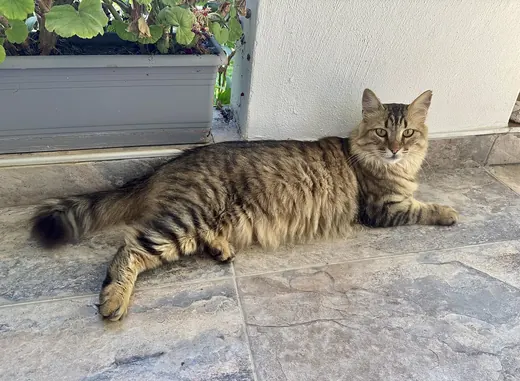
All cat coat colours and patterns →
Temperament
Care
Weekly brushing for the shorthair and twice a week for the semi-longhair, more during the moult. If it is polydactyl, check the claws on the extra toes, which can grow into the pad if they do not wear down. Daily play and harness walks if it enjoys them. Weight control: it is large and likes its food. It copes well with a few hours alone and adapts to a flat if it has scratching posts and play.
Health
A fairly healthy breed. Cryptorchidism (undescended testicles), cases of HCM and birthing problems have been described. Keep an eye on the claws of extra toes. Ask for the parents' echocardiograms if possible. As it is a large cat, watch its weight and joints from maturity.
Fun facts
It is one of the few breeds whose TICA standard accepts polydactyly, with up to seven toes per foot.
Pixie, the founder, gave the breed its name.
Genetic studies have ruled out any bobcat blood.
Many Pixie-bobs do not meow: they communicate with chirps and clicks.
Frequently asked questions
How big does a Pixie-bob get?
An adult Pixie-bob usually weighs 4–8 kg (9–18 lb) and stands about 25–35 cm (10–14 in) at the shoulder, which makes it a large cat.
How long does a Pixie-bob live?
Its usual life expectancy is 13–15 years. Living indoors, being neutered and having regular vet check-ups make the biggest difference.
Is the Pixie-bob hypoallergenic?
No. It produces the usual cat allergens. If someone at home is allergic, spend time with the breed before deciding and talk to an allergist.
Is the Pixie-bob good with children?
Usually yes: it tends to be patient and sociable with children. As with any cat, teach children to let it walk away when it has had enough.
How much play does a Pixie-bob need?
As a guide, 30 min of play a day. Its activity score is 3 out of 5: short daily play sessions with a wand toy work better than one long one.
Similar breeds
All breeds A to Z Cost calculator (Spanish) Food portions (Spanish)