
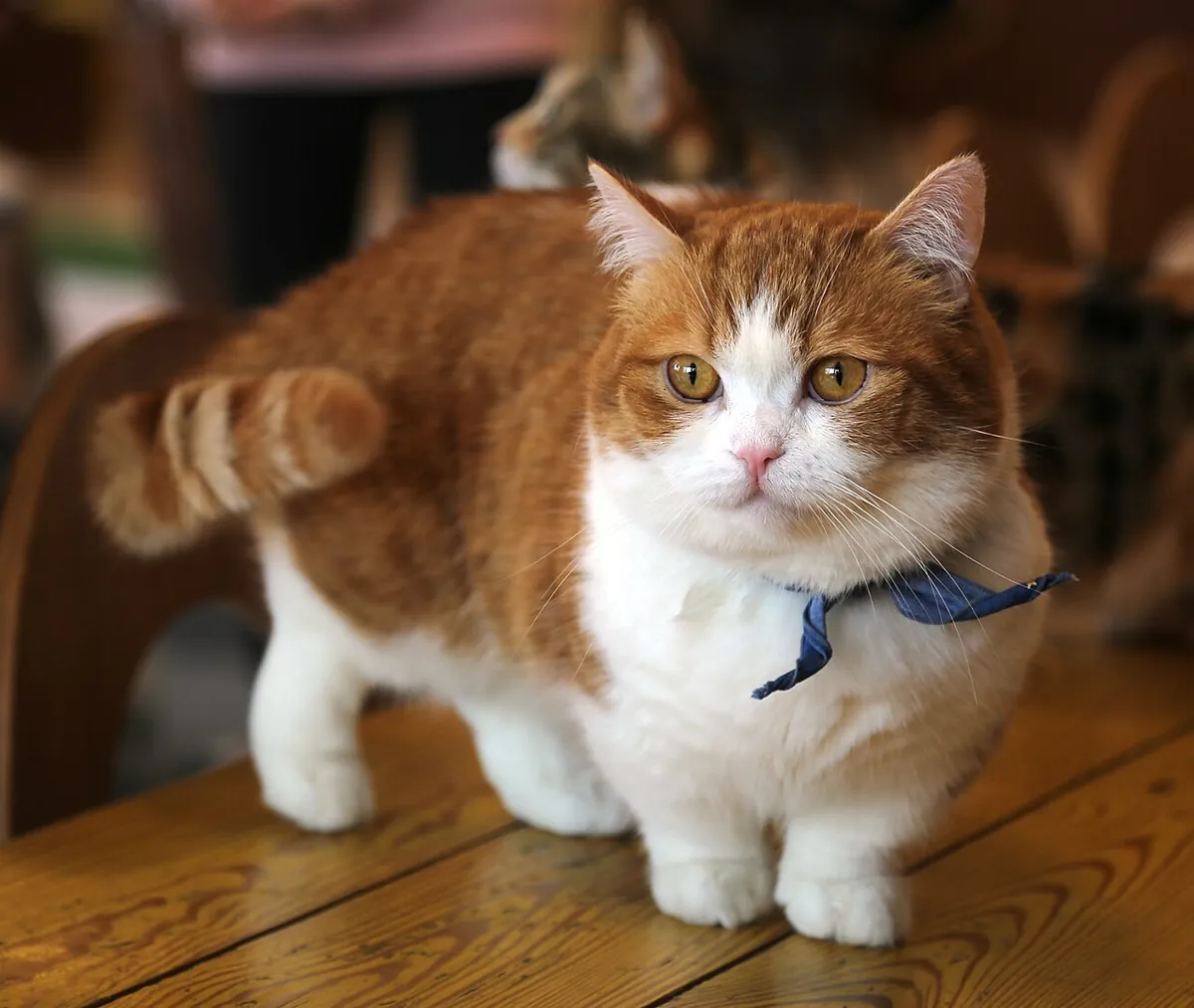
Munchkin
Also known as: Munchkin cat · Sausage cat · Short-legged cat · Dwarf cat · Corgi cat
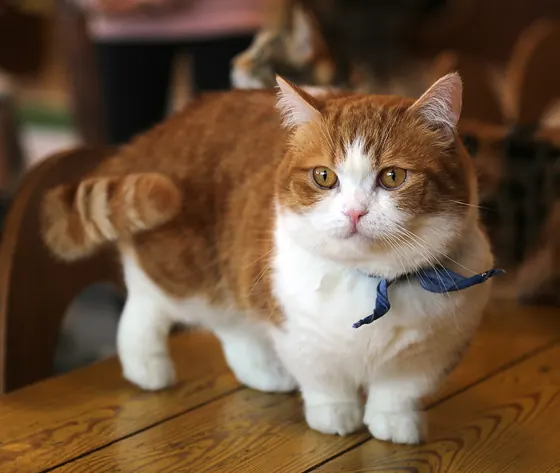
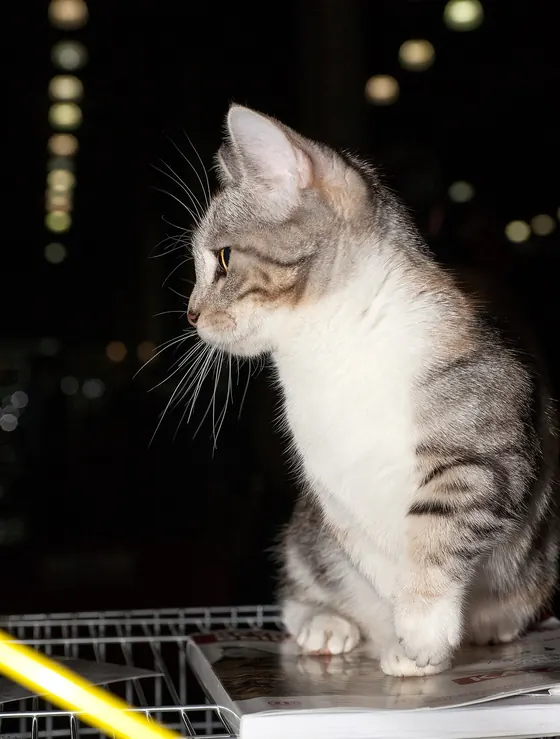
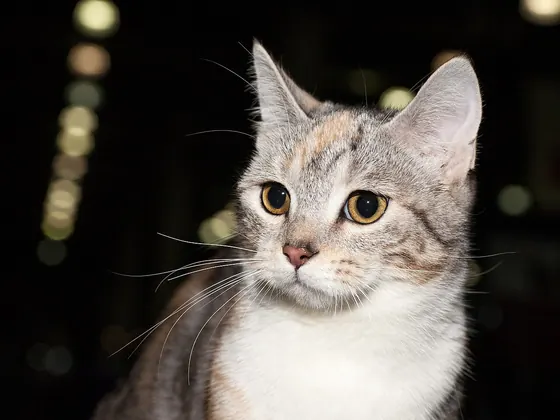
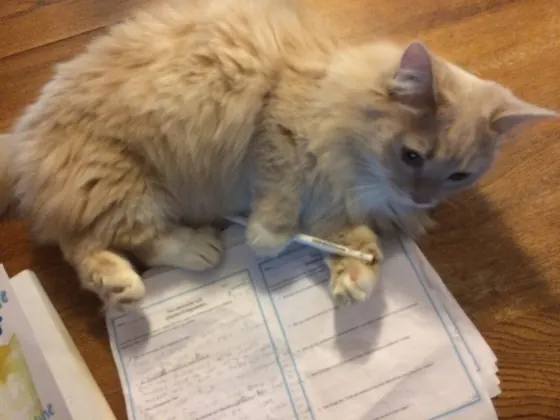
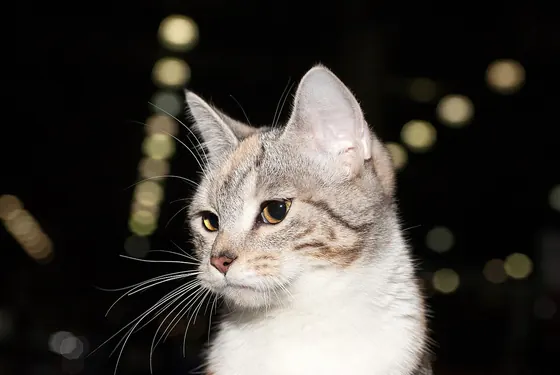
Photos: Tasy Hong (CC0) · Nickolas Titkov from Moscow, Russian Federation (CC BY-SA 2.0) · Doug McCaughan from Knoxville, TN, USA (CC BY-SA 2.0), via Wikimedia Commons.
Breed profile
* An estimate for Spain in 2026 (food, litter, vet and insurance), based on the size, grooming and health needs of the breed, not on measured costs of individual cats.
What it is like
In 1983 the teacher Sandra Hochenedel found a short-legged female cat hiding under a lorry in Rayville (Louisiana). She called her Blackberry, and most of today's Munchkins come from one of her sons, Toulouse. The short legs are caused by a dominant mutation that produces a form of chondrodysplasia, the same kind of disorder that gives the dachshund its short legs. With two copies of the gene, embryos die before birth, so it is always bred to normal-legged cats. It is playful and sociable, but it jumps worse than any other cat. TICA recognises it; FIFe, the British GCCF and the American CFA do not.
Temperament
Care
Make its life easier: ramps and steps up to sofas and windows, low-sided litter trays, wide, low scratching posts. Keep it slim, because every gram loads its spine and joints. Daily play at floor level. Have your vet check its spine and gait every year. If it is the temperament you are after, a normal-legged cat offers the same without the risk.
Health
Chondrodysplasia is in itself a disorder of bone development. Lordosis (sunken spine), pectus excavatum (sunken chest) and early arthritis from the abnormal load on the joints have been described. There are no large-scale studies, which is why many registries and vets ask for it not to be bred. It also inherits the risks of whichever breeds it is crossed with.
Fun facts
Its name comes from the Munchkins, the little people of The Wizard of Oz.
It was introduced to the general public at a 1991 show at Madison Square Garden, amid a lot of controversy.
Short-legged cats that lasted several generations were already described in the UK in the 1940s.
Many sit up on their hind legs like a meerkat to look around.
Frequently asked questions
How big does a Munchkin get?
An adult Munchkin usually weighs 2.5–4 kg (6–9 lb) and stands about 13–20 cm (5–8 in) at the shoulder, which makes it a small cat.
How long does a Munchkin live?
Its usual life expectancy is 12–15 years. Living indoors, being neutered and having regular vet check-ups make the biggest difference.
Is the Munchkin hypoallergenic?
No. It produces the usual cat allergens. If someone at home is allergic, spend time with the breed before deciding and talk to an allergist.
Is the Munchkin good with children?
Usually yes: it tends to be patient and sociable with children. As with any cat, teach children to let it walk away when it has had enough.
How much play does a Munchkin need?
As a guide, 30 min of play a day. Its activity score is 4 out of 5: short daily play sessions with a wand toy work better than one long one.
Similar breeds
All breeds A to Z Cost calculator (Spanish) Food portions (Spanish)