
Van pattern cat
Also called: Van pattern, Van cat, White cat with coloured tail.
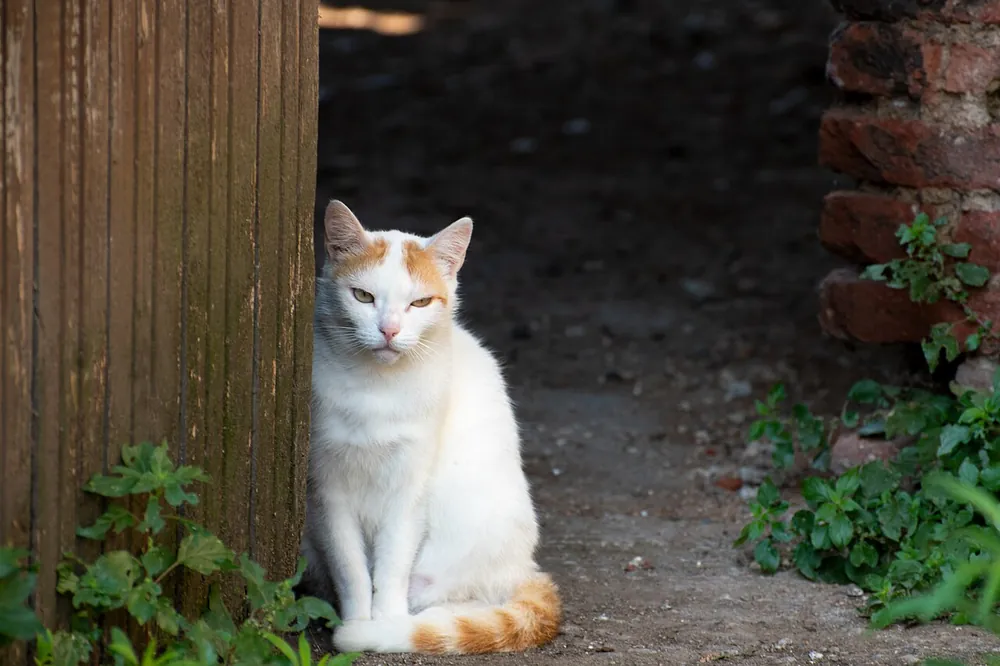
Almost all white, with colour only on the head (often two patches separated by a white stripe) and on the tail. It takes its name from the Turkish Van, the cat of Lake Van in Turkey, but the pattern appears in many other cats.
What it looks like
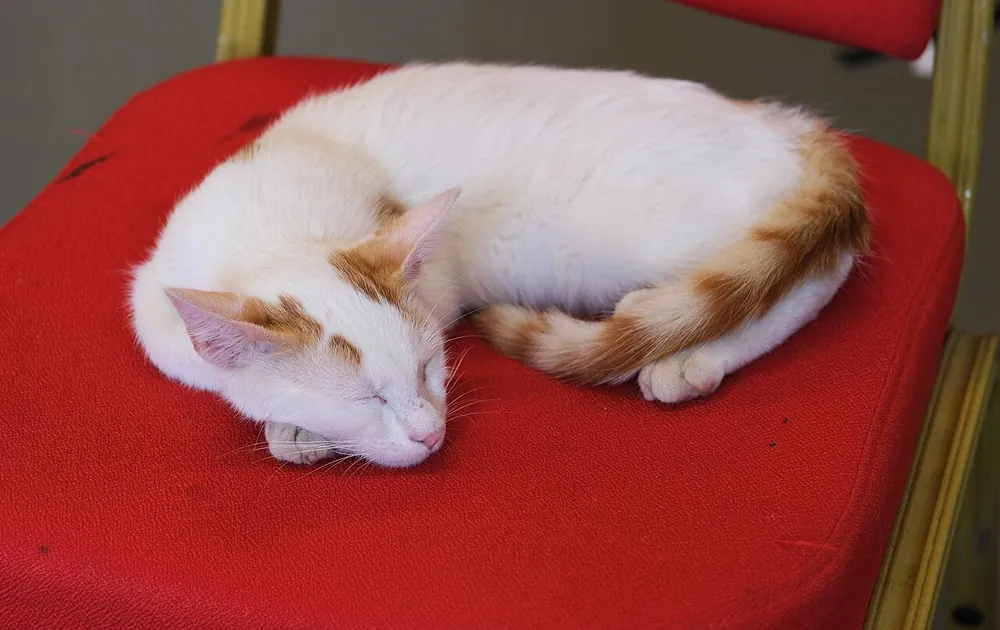
White body and legs, with one or two patches of colour on the head, between the ears, and a fully coloured tail, often ringed. Sometimes there is a small stray patch on the body. The colour can be anything, but the classic Turkish Van colour is red (auburn).
The genetics, made simple
It is the highest grade of the white spotting gene, usually with two copies and other genes pushing towards more white. The pigment cells barely leave their starting point and colour only the head and tail. It is not dominant white: underneath the white there is no hidden colour, just unpigmented skin, and the risk of deafness is lower than in all-white cats, although blue-eyed vans can have it.
Myths and what science says
The “thumbprint of Allah”
In Turkish Vans, a small patch of colour between the shoulder blades has traditionally been called “the thumbprint of Allah” and is considered lucky. It is a tradition, not a special genetic trait.
“Turkish Vans love water”
They have that reputation and a fairly water-resistant coat, and some do play with water. But it is a breed trait passed on by word of mouth, not a rule, and many have no wish to swim.
Fun facts
- In Turkey, the white cat of Lake Van (Van kedisi) is completely white and considered distinct from the registries’ Turkish Van.
- The van pattern is also accepted in Persians and British Shorthairs.
- A van kitten has its head and tail colour from birth.
Does it affect its health?
Being almost all white, the pink skin of the ears and nose burns easily in the sun; watch for scabs that do not heal. If it has blue eyes, have the vet check that it hears properly.
In the cat diseases encyclopedia:
Breeds where it appears or is typical
This coat turns up in plenty of moggies. These are breeds where it is common, characteristic or accepted; under each one, the colours the breed comes in.
 Turkish Van
Semi-longhair · Turkey
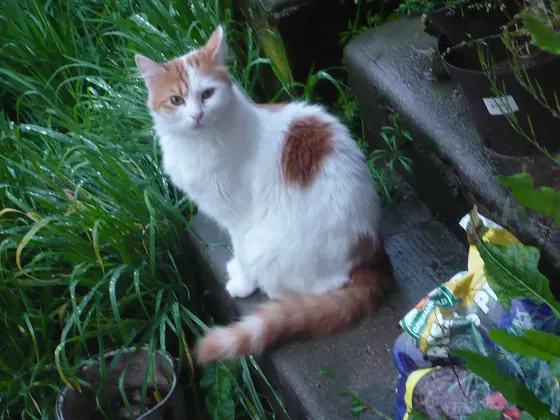
Van pattern: white body with colour only on the head and tail
Turkish Van
Semi-longhair · Turkey
Van pattern: white body with colour only on the head and tail
 Persian
 · Iran / United Kingdom
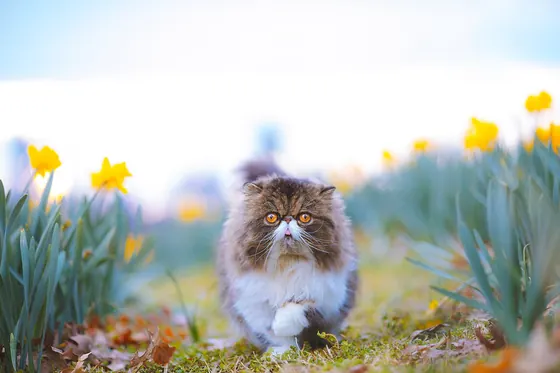
Almost all: white, black, blue, cream, chinchilla, golden, bicolour, tortoiseshell…
Persian
Persian · Iran / United Kingdom
Almost all: white, black, blue, cream, chinchilla, golden, bicolour, tortoiseshell…
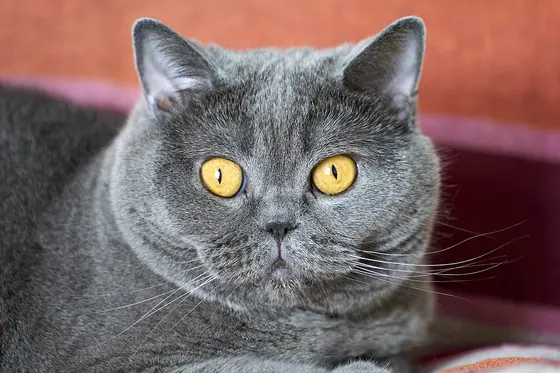 British Shorthair
Shorthair · United Kingdom
Blue (the classic), black, white, cream, lilac, chocolate, silver, golden, bicolours, colourpoint…
British Shorthair
Shorthair · United Kingdom
Blue (the classic), black, white, cream, lilac, chocolate, silver, golden, bicolours, colourpoint…
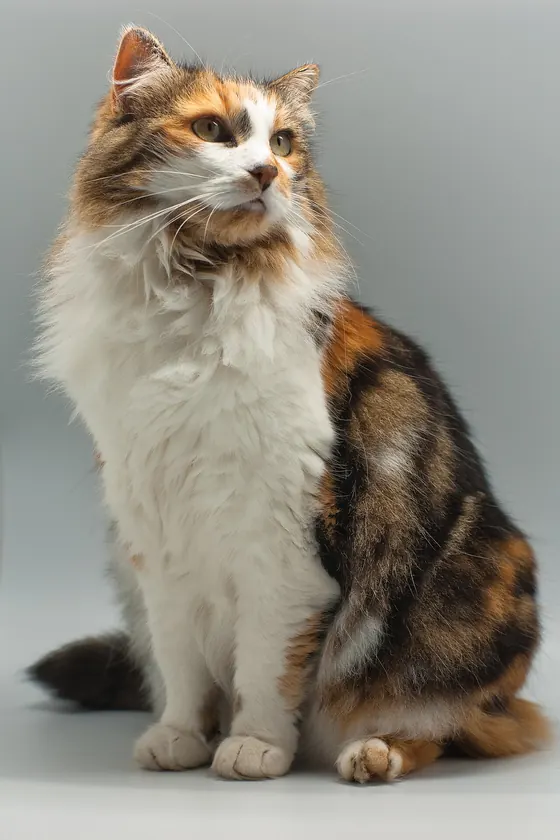 Norwegian Forest Cat
Forest · Norway
Almost all except colourpoint, chocolate, lilac, cinnamon and fawn; lots of white and tabby
Norwegian Forest Cat
Forest · Norway
Almost all except colourpoint, chocolate, lilac, cinnamon and fawn; lots of white and tabby
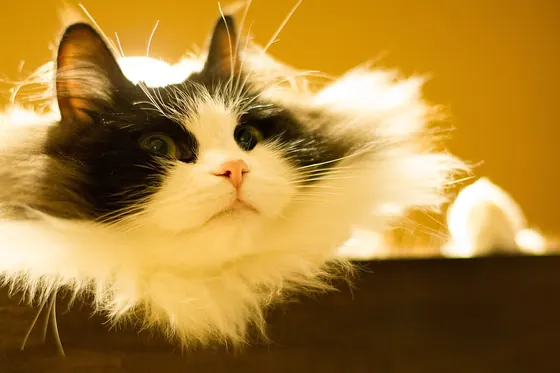 Ragamuffin
Semi-longhair · United States
Practically all, with or without white; eyes of any colour
Ragamuffin
Semi-longhair · United States
Practically all, with or without white; eyes of any colour
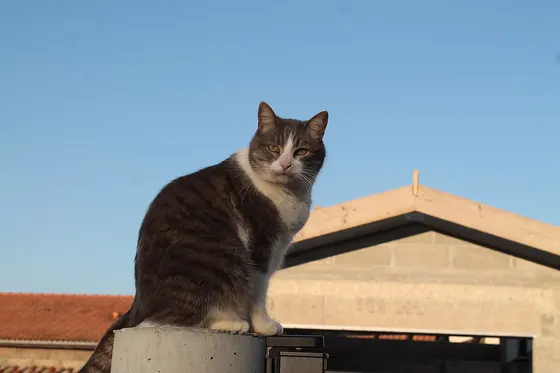 European Shorthair
Shorthair · Europe
Almost all: tabby, black, white, bicolour, tortoiseshell, red…; no colourpoint, chocolate or lilac in pedigree cats
European Shorthair
Shorthair · Europe
Almost all: tabby, black, white, bicolour, tortoiseshell, red…; no colourpoint, chocolate or lilac in pedigree cats
Frequently asked questions
What is a van cat?
A cat that is almost all white with colour only on the head and tail. The name comes from the Turkish Van.
Is a van cat a Turkish Van?
Not necessarily. The van pattern appears in domestic cats and other breeds. The Turkish Van is a specific breed.
Are van cats deaf?
Not as a rule. The risk is lower than in all-white cats, although blue-eyed vans can be deaf.
Educational content from Michipedia. The genetics of coat colour are simplified so they are easy to follow; colour tells you nothing about the personality of a particular cat.