
My cat is spraying urine: why it happens and how to stop it
Urine marking, or spraying, is a form of communication, not a hygiene problem or revenge. The cat leaves a scent message saying this is mine, or that something is bothering it. That's why changing the litter won't fix it: you need to understand what's worrying your cat. And, as always when urine turns up where it shouldn't, the vet comes first.
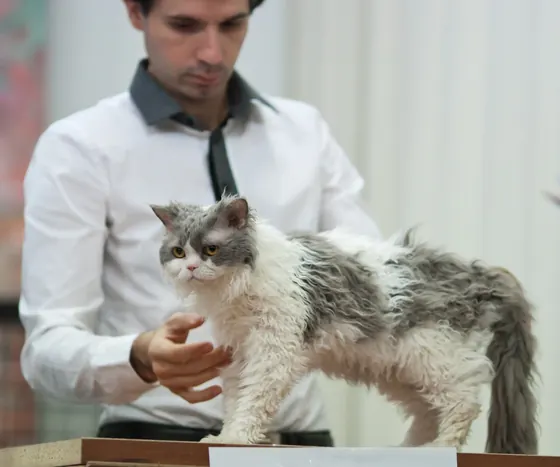
How to recognise spraying
Spraying is fairly easy to tell apart from ordinary peeing outside the litter tray. The cat backs up to a vertical surface, such as a wall, a door, the corner of a piece of furniture, a curtain or the side of the sofa, raises its tail, which often quivers, and squirts a small jet of urine backwards, often while treading with its back feet. The amount is small and the smell very strong. Sometimes marking happens on horizontal surfaces, particularly on new objects, bags, visitors' clothes or things carrying unfamiliar smells. The key point is that a cat that sprays usually carries on using its litter tray to urinate as normal.
First, rule out medical causes
Even though spraying is a communication behaviour, the first step is always a trip to the vet. Some urinary problems, such as idiopathic cystitis, crystals, stones or infections, can make a cat pass small amounts of urine outside the tray, and from the outside that can look like spraying. Pain and illness are also sources of stress that can trigger marking. The vet will test the urine and examine the cat. If it's a male and you see him straining without producing urine, or licking his genitals a lot, don't wait: it could be a urinary blockage, which is an emergency. Only once medical causes have been ruled out does it make sense to tackle spraying as a behaviour problem.
Why cats spray
Urine carries very rich chemical information for other cats: who the cat is, whether it's entire, what hormonal state it's in and how long ago it passed by. Spraying is used to mark out territory, to announce its presence to other cats and, in entire cats, to signal that it's available to mate. But it's also a response to insecurity: a cat that feels its territory is under threat, or that something has changed, sprays to surround itself with its own scent and feel safer. That's why spraying so often appears after changes such as a house move, building work, new furniture, or the arrival of a baby, another animal or a new person in the home.
Neutering: the most effective step
Entire cats, especially males, spray far more than neutered ones, and their urine smells much stronger. Neutering a male cat that sprays reduces or stops the spraying in the great majority of cases, although it can take a few weeks for the effect to show, and in some cats that have been spraying for a long time the habit partly remains. In females, marking is closely linked to being in season, and spaying almost always resolves it too. The general recommendation is to neuter before spraying starts, at around four to six months, and in Spain that's what the animal welfare law requires for pet cats, except breeding cats belonging to registered breeders.
Other cats, indoors and out
One of the most common causes of spraying in neutered cats is the presence of other cats. In multi-cat homes, spraying can be a sign of tension between them, even when there are no visible fights. And very often the threat comes from outside: a neighbourhood cat crossing the garden, appearing on the balcony or visible through the window can make your cat spray at exactly that window or at the front door. Pay attention to where it sprays, because that usually gives you clues: if it's by windows or doors to the outside, the threat is coming from outside; if it's in walkways inside the home, it may be tension within the household.
What to do about cats outside
If the spraying is linked to cats outdoors, you need to reduce the sense of threat. Cover the lower part of the windows where your cat sees them, with frosted film or by partly lowering the blind, at least for a while. Discourage outside cats from coming near your home: don't leave food out, remove anything that attracts them and, if you have a garden, there are harmless deterrents such as motion-activated sprinklers. If your cat goes out, consider whether the conflict starts out there. Indoors, create safe areas away from those windows, with hiding places and high spots. And clean the marked areas thoroughly so they don't smell like an invitation.
If the problem is inside the home
When spraying is caused by tension between cats in the same home, the answer is to reduce competition. Increase the number of resources and spread them across different areas: food bowls, water bowls, litter trays (one per cat plus one), scratching posts, beds and high spots, so no cat has to pass close to another to reach what it needs. Offer more hiding places and alternative routes. Play with each cat separately so they all get their dose of hunting and attention. If there are serious fights, you may need to separate them and reintroduce them gradually, as if it were the first time. A pheromone diffuser designed for harmony between cats can help a little as back-up.
Proper cleaning is part of the treatment
A marked spot invites more marking, because the cat smells its own message and renews it. That's why you need to clean thoroughly and with the right product. No ammonia and no bleach: urine contains ammonia and that smell can encourage it to spray again. What works are enzymatic cleaners, which break down the organic residue in urine; in Spain they cost between €8 and €20 and are sold in pet shops. Apply plenty, so it soaks in as deep as the urine did, and let it air dry. On porous painted walls or on fabrics you may need to repeat it. An ultraviolet torch, for around €10 or €15, helps you find marks you can't see.
Pheromones and other support
Feline facial pheromone diffusers mimic the scent marks cats leave when they rub their cheeks on places where they feel safe, and they're used to reduce stress and, with it, spraying. In Spain they cost €25 to €35 with the first refill, which lasts about four weeks, and then around €20 to €25 per refill. To be honest, studies on how well they work are mixed: they help some cats and make little noticeable difference to others. They can be a useful aid, but they're no substitute for dealing with the cause. Put one in the room where your cat sprays most, plugged in permanently, and not behind furniture that blocks the diffusion.
What doesn't work
Punishing a cat for spraying, rubbing its nose in the urine or telling it off is counterproductive. In many cases spraying is a response to insecurity and stress, and punishment increases both, so the cat may spray even more, or do it secretly in places that are harder to find. Shutting it away permanently doesn't solve anything either. What does work is a combination of measures: rule out medical problems, neuter if the cat isn't already, identify what's bothering it and reduce it, spread out resources, clean properly and give it a sense of security. If the problem persists despite all this, see a vet trained in clinical behaviour, who can also consider supportive medication.
Spraying is done standing, against a vertical surface, with a quivering tail and a small amount of urine, and it's a message, not revenge. See the vet first. Neutering solves it in most cases. If it carries on, find out what's bothering your cat (cats outside, tension at home, changes), spread out resources, clean with an enzymatic cleaner and never punish.
Educational content from Michipedia, translated from the Spanish original. It does not replace the advice of a vet or a feline behaviour specialist. Every cat is an individual.