
Cats and other pets: dogs, rabbits, rodents, birds and fish
A cat can live alongside many species, but not all on the same terms. With a dog it may become best friends; with a hamster, a budgie or a fish it is still a hunter, however many years it has gone without catching anything. The key is knowing what to expect from each combination and never trusting instinct completely.
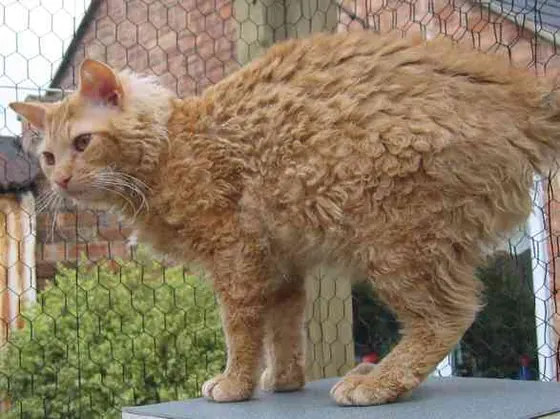
A cat is still a predator
Even if it lives in a flat and eats dry food, a cat keeps its hunting instinct fully intact. Small, fast animals that move in little hops or flutter, such as rodents, birds or fish, are natural prey, and the urge to chase and catch them has nothing to do with hunger. Many cats live for years alongside a hamster without touching it, but that is usually because they haven’t had the chance, not because they have learnt to respect it. So with a cat’s natural prey, the rule is that they must never be together unsupervised, and ideally never together at all. With other species, such as dogs, the relationship can be one of equals.
With dogs
Cats and dogs can live together very happily, and many become great friends, especially if they meet when young. The key is the dog’s temperament: a calm, well-trained dog without a strong chase instinct makes a good companion; one with a powerful prey drive, such as some sighthounds or terriers, can be a serious risk. Introductions must be gradual, with the dog on a lead at first, and the cat must always have escape routes and high places the dog can’t reach. Its resources, such as the litter tray and food, should be out of the dog’s reach, since dogs tend to eat the cat’s food and even what is in the litter tray.
With rabbits
Cats and rabbits can live together, especially if the rabbit is large and self-assured, and if they have grown up together or are introduced very calmly. There are homes where they share the sofa without any problem. But a small rabbit or a young kit is prey to many cats, and even if the cat doesn’t mean any harm, rough play can end badly. Rabbits are also very sensitive to stress: a cat pestering it or staring at it through the hutch can make it ill. Always supervise time together, give the rabbit a refuge the cat can’t get into, and if you see the cat stalking it or the rabbit is constantly hiding, separate them.
With rodents and ferrets
Hamsters, mice, rats, gerbils, guinea pigs and chinchillas are a cat’s natural prey and should never be together. Their cage should be sturdy, with catches the cat can’t open with its paw, and placed up high or in a room the cat doesn’t enter. Bear in mind that even if the cat never touches them, having it watching the cage every day is a source of chronic stress for a small animal. Ferrets are a different matter: they are predators too, and in some homes they live with cats and play as equals. Even so, they need a very gradual introduction, because their play can be rough and both can get hurt.
With birds
Birds, from a budgie to a parrot, are very tempting prey for a cat. The cage must be solid, stable, hard to tip over and placed where the cat can’t climb on top or reach a paw through the bars. Never let the bird fly free around the house while the cat is present, even if it seems indifferent. Large parrots can defend themselves and injure a cat with their beak, but that doesn’t make living together safer; it makes it more dangerous for both. Bear in mind too that a predator constantly near the cage is very stressful for a bird, which may stop eating or start pulling out its feathers.
A small scratch can be serious
A cat’s mouth and claws harbour bacteria, including Pasteurella multocida, which in a small animal can cause very serious, fast-moving infections. A bird, rabbit or rodent that has been scratched or bitten by a cat, even if the wound looks superficial and isn’t bleeding, can die within a day or two from infection if it doesn’t get treatment. So if your cat catches or injures another animal in the household, however small the wound looks, take that animal to the vet as soon as possible, preferably one that treats exotic pets. This is one of those cases where waiting to see how it goes can be fatal.
With fish and reptiles
An aquarium is pure entertainment for many cats, which can spend hours watching. Make sure it has a secure lid the cat can’t shift or lift, and that it is firmly fixed so the cat can’t tip it over when jumping on top. Watch out for cables and heaters too. For reptiles, such as tortoises, lizards or snakes, the vivarium must be securely closed. A large snake can be a danger to a cat, and a small one can be prey. Reptiles can carry salmonella, so wash your hands after handling them and don’t let the cat drink their water or get into the vivarium.
How to introduce them
With other species, just as with other cats, the key is to go slowly. Start by swapping scents, with blankets or toys. Then let them see each other from a distance, with the cat calm and busy, for example eating or playing, and reward calm behaviour. If the cat stares fixedly, crouches, swishes its tail from side to side or gets ready to pounce, it is in hunting mode: calmly interrupt the situation, move the cat away and try again another day from further off. Don’t punish the cat for hunting: it is its nature. What you need to do is manage things so that it never gets the opportunity.
Organising your home
If you share your home with a cat and small animals, the safest arrangement is to keep them in different rooms, with the door shut when you are out. If that isn’t possible, make sure cages and vivariums are cat-proof, with secure catches, and in stable spots. Make sure the cat has its own resting places, scratching posts and hiding spots, and enough play and stimulation to channel its hunting instinct. A tired, well-stimulated cat takes less interest in the hamster. And never leave children alone in charge of supervision: it is easy for them to leave a cage open by accident or put the small animal within the cat’s reach.
Before bringing home a new animal
If you already have a cat and are thinking of adding another species to the family, think about the cat first. A cat with a very strong hunting instinct, which stalks birds through the window or hunts anything that comes into the house, is not a good companion for a rodent or a bird, however careful you are. A nervous cat may have a very hard time when a young, boisterous dog arrives. Consider your home too: if you can’t keep separate rooms, it may not be a good idea. And if you already have another animal and want to adopt a cat, ask the rescue: many know whether a particular cat has lived with dogs, rabbits or other animals.
With dogs, and sometimes with large rabbits or ferrets, living together is possible with a gradual introduction. Rodents, birds and fish are prey: never together, cat-proof cages and separate rooms. If your cat scratches or bites a small animal, even if it looks like nothing, get it to the vet as soon as possible: the bacteria in a cat’s mouth can kill it within hours.
Educational content from Michipedia, translated from the Spanish original. It does not replace the advice of a vet or a feline behaviour specialist. Every cat is an individual.