
What is the oldest cat in the world? Creme Puff, Flossie and other records
The oldest cat on record is Creme Puff, a female cat from Austin, Texas, who lived for 38 years and 3 days, from 1967 to 2005, according to Guinness World Records. As the oldest living cat, Guinness recognised Flossie, a British cat, in November 2022, when she was almost 27; according to press reports, she turned 30 in December 2025.
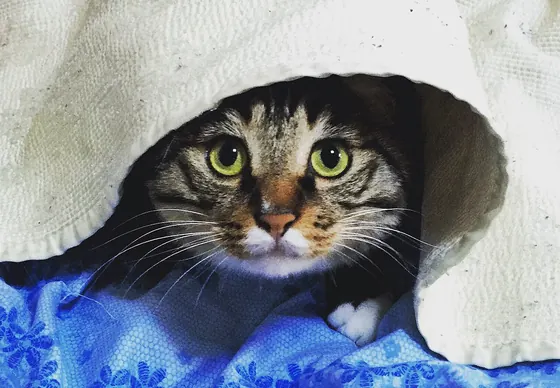
Creme Puff, 38 years and 3 days
The overall record for feline longevity recognised by Guinness World Records belongs to Creme Puff, a mixed-breed tabby who lived in Austin, Texas (United States). She was born on 3 August 1967 and died on 6 August 2005, aged 38 years and 3 days. That is an extraordinary age: more than twice the average life expectancy of a domestic cat. To put it in perspective, the age conversion charts vets use put a 20-year-old cat at around 95 to 100 in human years, so Creme Puff would have comfortably beaten any human record.
One owner, two records
The curious thing is that Creme Puff’s owner, Jake Perry, also owned the previous record holder, a cat called Grandpa Rex Allen, who according to the records lived for 34 years and 2 months, from 1964 to 1998. Perry put his cats’ longevity down to a very unusual diet, including foods no vet today would recommend for a cat, and to a home adapted so they could climb and keep themselves entertained. It is unwise to draw conclusions from a single case: two cats from the same home living so long probably owes more to genetics, chance and a sheltered indoor life than to their menu.
Flossie, the oldest living cat
In November 2022, Guinness World Records recognised Flossie, a brown and black cat from the United Kingdom, as the world’s oldest living cat, aged 26 years and 316 days at the time of verification. Flossie was taken in as a stray in December 1995, when she was a few months old, near a hospital in Merseyside, England. She lived with several members of the same family and, in 2022, was handed over to the British charity Cats Protection, which rehomed her with her new carer, Vicki Green, and confirmed her age from her vet records. Guinness described her as deaf and with poor eyesight, but in good health.
Is she still alive? What we know in 2026
According to several press reports published in January 2026, Flossie celebrated her 30th birthday on 29 December 2025 and was still the record holder. In fairness, it should be said that the public Guinness entry for the oldest living cat category does not show the holder’s name at the time of writing, and that these records change when the cat dies or an older one is verified. Other contenders also do the rounds, such as cats in the United Kingdom or the United States whose owners claim they are 29 or 30, but until they submit documents to Guinness their claims cannot be accepted.
Other holders and unverified records
Before Flossie, Guinness recognised other living cats as the oldest, among them Scooter, a Siamese from Texas who was 30 in 2016, and Corduroy, a cat from Oregon recognised in 2015 at the age of 26. There are also famous cases that have never been verified. The most often cited is Lucy, a Welsh cat said to be 39 when she died in 2011, but whose age no vet was able to document, so Guinness does not recognise her. For an age record to count, there has to be reliable documentation from the cat’s early life: vet records, adoption records or equivalent proof.
How long an ordinary cat lives
Records aside, a well-cared-for indoor cat lives on average between 13 and 17 years, and more and more cats are reaching 18 or 20. Cats that live on the street have much shorter lives, because of road accidents, fights, infectious diseases and poisoning. Breed has some influence: moggies tend to be long-lived, and breeds such as the Siamese, the Russian Blue and the Burmese have a reputation for living many years, while in some breeds with hereditary problems the average lifespan is shorter. But the biggest factor is not breed, it is care: living indoors or having safe outdoor access, neutering, a healthy weight and regular check-ups.
What helps a cat live longer
There are no secrets or miracle diets, but there are habits that lengthen a cat’s life. Neutering reduces risks such as mammary tumours and womb infections in females, and fights and roaming in males. Keeping a healthy weight prevents diabetes and arthritis. Vaccinations and worming protect against serious diseases. And from the age of seven or eight, a yearly check-up with blood tests, a urine test and a blood pressure reading, every six months from ten or twelve, picks up kidney disease, hyperthyroidism and high blood pressure in time: all three are very common in older cats and treatable if caught early. A stimulating environment and good dental health also add years.
Caring for a very old cat
A cat over 15 needs a few adjustments at home. Make it easier to reach favourite spots with ramps or steps, and provide a low-sided litter tray, several water points and a warm, soft bed, because many older cats have arthritis even if they don’t limp. Keep an eye on weight, appetite, how much your cat drinks and whether it is weeing more, as these are the first signs of many illnesses. And watch for changes in behaviour, such as miaowing at night, seeming disorientated or no longer grooming. Michipedia’s age calculator tells you how old your cat is in human years, and the senior cat guide explains how to support it through this stage.
The oldest cat recorded by Guinness is Creme Puff, from Austin (Texas), who lived 38 years and 3 days (1967 to 2005). As the oldest living cat, Guinness recognised Flossie, from the UK, in 2022, aged 26 years and 316 days; the press reported that she turned 30 in December 2025. Cases such as Lucy (39 years) are unverified. A well-cared-for cat lives 13 to 17 years.
Educational content from Michipedia, translated from the Spanish original. It does not replace the advice of a vet or a feline behaviour specialist. Every cat is an individual.