
Why do cats like boxes so much? Safety, warmth and hunting
Cats like boxes because they make them feel safe: an enclosed space with their back protected, from which they can watch without being seen. Boxes also hold in heat and make a perfect spot for an ambush, and a study of shelter cats found that having a box helped them settle in sooner and with less stress.
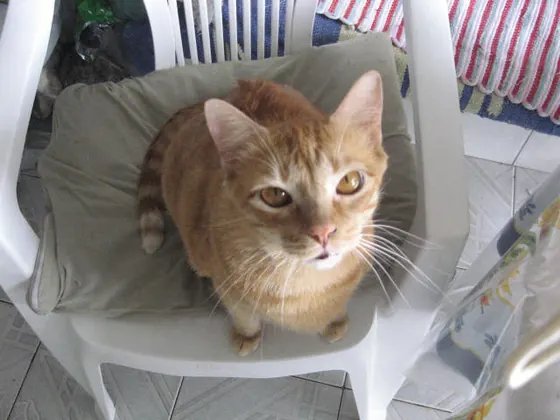
A hiding place with a view
The cat is both hunter and prey. In the wild, its ancestor, the African wildcat, rests in hollows, burrows and thickets where nothing can take it by surprise from behind or above, and from which it can watch without being seen. A cardboard box reproduces exactly that: walls on three or four sides, a roof or a high rim, and an opening to look out of. Inside, the cat feels in control of the situation. That is why so many cats choose the box from the parcel that has just arrived over the very expensive bed you bought them: the bed offers no protection, the box does.
What science says: less stress
In 2014, a team from Utrecht University in the Netherlands, led by Claudia Vinke, published a study in the journal Applied Animal Behaviour Science on cats newly arrived at a shelter. There were 19 cats: ten were given a box to hide in and nine were not. The cats with a box showed fewer signs of stress in the first few days and by the third day were already as calm as they would be at the end of the study, a level the cats without a box did not reach until day 14. A later trial by the same group, in 2019, with more cats, confirmed that being able to hide reduces stress. The conclusion, now reflected in feline welfare guidelines, is that being able to hide is not a whim but one of the basic ways a cat manages stress. A cat with nowhere to hide has a harder time.
Warmth counts too
Cats are comfortable at higher temperatures than we are: their thermal comfort zone, in which they do not have to spend energy keeping warm, is well above the usual temperature of a home. That is why they seek out sunshine, radiators, a laptop that is switched on and your lap. Cardboard is a good insulator, and a small box that the cat only just fits into holds in its own body heat. Those tight boxes it seems impossible to squeeze into have exactly that advantage: the less air around the cat, the less cold gets in. It is the same reason cats curl up into a ball when they sleep.
If I fits, I sits: the imaginary squares
The liking for enclosed spaces is so strong that some cats will sit inside a square marked out with tape on the floor. In 2021, a citizen science study led by Gabriella Smith and published in Applied Animal Behaviour Science asked owners to place various shapes on the floor, including an illusory square, the Kanizsa square, which the human eye perceives even though its sides are not drawn. Several cats chose to sit inside that imaginary square just as they would inside a real one, which suggests they perceive the illusion as we do. It was a small, home-based study: of the hundreds of cats signed up, only 30 completed all the trials and nine sat in one of the shapes, but it helps explain why any outline draws them in.
An ambush post and a toy
A box is not just a refuge: it is also a hideout from which to launch ambushes. Many cats get into a box and wait for something to go past, a feather, a foot, another cat, so they can pounce by surprise. It is the age-old hunting sequence: hide, stalk, pounce. That is why a box with a couple of holes to poke a string or a toy through makes a great game, and boxes, paper bags with the handles removed and tunnels are among the cheapest ways to enrich an indoor cat’s life. They can also be bitten and scratched, which is all part of the fun.
Why they prefer the box to the new bed
It is almost a running joke among people who live with cats: you buy a soft, expensive bed and the cat climbs into the box it came in. There are several reasons, besides safety and warmth. The box is new and smells of unfamiliar things, and cats are born explorers that investigate any object that appears in their territory. Cardboard can be scratched, chewed and marked with their scent, so within a few days it becomes theirs. And many cat beds are open, too big or placed somewhere busy, whereas the box usually ends up in a quiet corner. If you want your cat to use its bed, try putting it inside a box, placing it up high or somewhere sheltered, and leaving one of your worn garments in it.
When the box is a clue
A cat getting into boxes is normal and healthy. What is worth watching is the context. If a cat that is usually out and about around the house starts spending most of the day hidden away, in boxes, wardrobes or under the bed, and is also eating less, no longer comes to greet you or stops using the litter tray normally, it may be a sign of pain, illness or significant stress, for example from the arrival of another animal, a house move or building work. Cats hide discomfort, and hiding is often the first visible clue. If you see a change like this, it is best to talk to your vet.
How to make the most of it at home
Offer your cat several hiding places around the house, at different heights: a cardboard box with a side opening, a fabric cave, a gap on a shelf or the top of a wardrobe with a blanket. In multi-cat homes, have more hiding places than cats, so nobody has to compete. At the vet and when travelling, a carrier the cat knows and that opens from the top works as its safe box: if you leave it out at home, always open, with a blanket inside, many cats use it to sleep in and then get into it without a fight. Remove staples, sticky tape and plastic from boxes before handing them over, so the cat does not swallow them.
Cats like boxes because they offer safety, a spot with their back covered from which to keep watch; they hold in heat and they are good for ambushes. A 2014 Utrecht University study found that shelter cats given a box were less stressed and settled in sooner. Give your cat several hiding places and take note if it suddenly starts hiding all day.
Educational content from Michipedia, translated from the Spanish original. It does not replace the advice of a vet or a feline behaviour specialist. Every cat is an individual.