
Going on holiday without the cat: home sitter, cattery or someone else's house
With dogs, the question is kennels or sitter. With cats, the scales almost always tip the same way: cats are territorial, and what they cope with worst is not you leaving but being taken out of their home. Even so, there are cases where a good cattery is the best option.
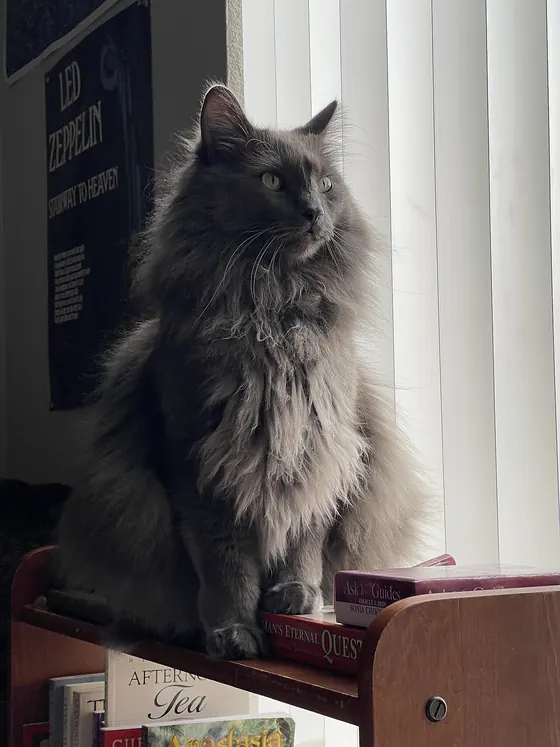
Why cats prefer to stay at home
For a cat, home is not just where it lives: it is its territory, a map of scents, routes, hiding places and high spots that it knows by heart and that makes it feel safe. Taking it out of there to an unfamiliar place, with the smells of other cats and new noises, is for many cats one of the most stressful experiences there is. That is why the option most cats cope with best is staying at home with someone coming in to see them. They will miss their people, but they keep their surroundings, their litter tray, their window and their routine. The exceptions are cats with medical needs that require constant supervision, and those living in homes nobody can get into while you are away.
The home cat sitter
A sitter who comes to your home once or twice a day cleans the litter tray, puts out food and fresh water, gives medication if needed, plays with the cat for a while and checks it is well. It could be a relative, a neighbour or a professional. For a healthy adult cat, one visit a day is the minimum; two is better, especially if the cat is young, very sociable or on medication. For a long absence, having the sitter spend some quiet time with the cat, even just sitting on the sofa, makes a difference for cats that miss company. Some sitters stay overnight, a useful option for very dependent cats or for absences of several weeks.
What it costs in Spain
In Spain, a professional cat sitter usually charges €12 to €20 per visit of 30 to 45 minutes, with somewhat higher prices in big cities and in high season, and extra charges for medication, several cats or additional visits. An overnight stay costs €30 to €50 a night. A cattery costs €12 to €25 per day per cat, with discounts for siblings sharing a room and surcharges in August, Easter or Christmas. For a two-week holiday with one cat, you are looking at €170 to €350, depending on the option and the number of visits. Whichever you choose, it is wise to budget a margin for a possible vet visit.
How to choose a cat sitter
Here there are no premises to visit, just a person who will have the keys to your home and responsibility for your cat. Ask for references and call them. Arrange a meeting beforehand with the cat present and watch how they approach it: a good cat sitter does not pick the cat up the moment they arrive, but lets it come to them at its own pace. Ask what they would do if the cat does not appear, does not eat or there is no pee in the tray. Agree in writing on the number of visits, their length and the price, and ask for a photo or a message every day. And leave written authorisation for them to take the cat to the vet, with a spending limit if you prefer.
When a cattery is the best option
There are situations where a good cattery has advantages: cats on medication several times a day or with illnesses that need monitoring, diabetic cats that need their insulin at set times, very long trips, or homes where there is nobody trustworthy who can get in. It also suits very sociable, confident cats that handle change well. The key is that it should be a cats-only boarding facility or, at the very least, have a cat area completely separate from the dogs: the smell and barking of dogs a few metres away turn the stay into torture. A place that mixes cats and dogs in the same space is not a cattery.
What to ask and look for in a cattery
Ask to see the accommodation where your cat will stay, not just the reception. Each cat, or each group of cats from the same household, should have its own space, without mixing with cats from other homes. The space should have a hiding place, somewhere high to climb up to, the litter tray separate from the food, and a bed. Ask which vaccinations they require, because a cattery that does not insist on all cats being up to date is a bad sign, and whether they require parasite treatment or FeLV testing. Ask which vet they use, what they do if a cat is not eating and how often they update you. And notice the smell and the cats already there: if they look relaxed, that is a good sign.
The danger of not eating
Many cats eat little or nothing on their first day somewhere new, which is understandable. But in a cat, not eating for several days is dangerous, especially if it is overweight: it can develop hepatic lipidosis, a serious liver disease. So whether at a cattery or with a sitter, someone has to check that it is eating and tell you if 24 to 48 hours go by without it doing so, and there must be a vet to turn to. Bringing its usual food, with no change of diet while you are away, and some very tempting wet food helps. And if your cat is one that stops eating with any change, that is one more argument for it staying at home.
What to leave ready
Plenty of food, the same as it always eats, measured out by day with several days' spare in case you are delayed. Its usual litter, because a change of litter is a common reason for rejecting the tray. If it is going to a cattery, its carrier, a blanket or bed that smells of home and a toy or two. Medication in its packaging, with written instructions. Its vaccination record and microchip number. And a sheet with your phone numbers, those of a contact person who can be reached, your vet and a 24-hour emergency clinic, plus its habits: how much it eats, where it likes to hide, what frightens it and what is normal for it. The more specific, the better.
A relative's or friend's house
Taking the cat to someone else's home has the drawbacks of a cattery, because it is new territory, and none of its advantages, because that home is not set up for cats. It can work with very confident cats or ones that already know the house, but in general it is the least advisable option. If you do it, give the cat a room of its own with everything it needs and the door shut for the first few days, and check windows, balconies and toxic plants. If there is a dog or another cat in that home, keep them apart: this is not the moment for introductions. And the cat must not be allowed outside under any circumstances, because a cat in an unfamiliar place gets lost easily.
Coming home
If your cat has been at a cattery, it is normal for it to act a bit strangely when it gets back: it may hide, be distant or, on the contrary, very clingy, and it may hiss at another cat in the home, because it comes back smelling different. Give it time and space, do not force anything and, if there are several cats, do a gentle reintroduction, letting them sniff each other through a door before putting them together. If it stayed at home, it may ignore you for a while as if you had offended it and then refuse to leave your side. What is not normal is not eating, repeatedly peeing outside the tray or being listless: in those cases, go to the vet.
Most cats cope better with staying at home with a sitter who visits once or twice a day (€12 to €20 per visit in Spain) than with going somewhere else. A cattery (€12 to €25 a day) makes sense for cats on medication or for long trips, as long as it is cats only and each household has its own space. And someone must check that it eats.
Educational content from Michipedia, translated from the Spanish original. It does not replace the advice of a vet or a feline behaviour specialist. Every cat is an individual.