
Pedigree or ordinary cat? How to choose
In Spain, the vast majority of cats are not pedigree, and they do not need to be. Choosing a pedigree cat can make sense if you want a particular look or type of character, but it comes at a price, and not only in euros.
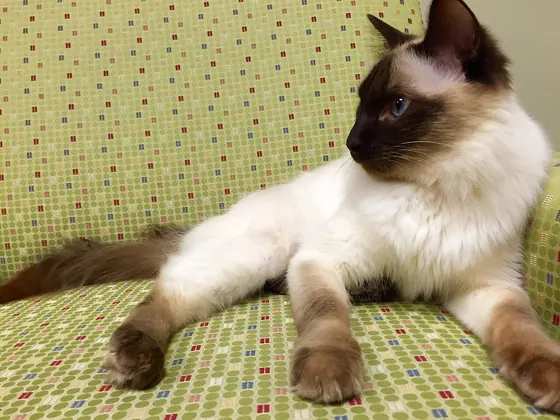
Most cats have no breed
With dogs, breeds are everywhere. With cats, they are not. The vast majority of cats living in Spanish homes are what is called the common or domestic cat, short or long-haired, with no pedigree and no defined breed. The European Shorthair does exist as a recognised breed, but the ordinary cat you adopt from a shelter is something else: the product of centuries of cats breeding freely with one another. This means that, when we talk about pedigree versus mixed breed in cats, the mixed breed is not the exception: it is the norm, and pedigree is a minority choice that is best made for good reasons.
What a breed does give you
Mainly predictability in looks: the approximate adult size, the type of coat and its upkeep, the colour, the shape of the head. If you want a cat with long silky fur, a hairless one, a colourpoint or a giant-sized one, a breed guarantees it. It also points to tendencies in character: studies of thousands of cats have found real differences between breeds, above all in activity levels. Oriental breeds tend to be chatty and very attached to their people; the Bengal and the Abyssinian, very active; the British Shorthair and the Ragdoll, calm. These are tendencies, not guarantees, but they do exist.
What a breed does not give you
A guaranteed character. Within each breed there are cats of every kind, and socialisation in the first months counts for an enormous amount. A British Shorthair raised without contact with people can be more unfriendly than an ordinary cat raised in a home with children. Nor does a breed guarantee good health; sometimes quite the opposite. And it does not make one cat cleverer, cleaner or more affectionate than another. A pedigree certifies who its parents and grandparents were, not what the cat you take home will be like. That is why the useful question is not which breed, but which particular cat and where it comes from.
Health: where the difference shows most
Several breeds carry hereditary problems tied to the way they were selected. Persians and Exotics with very flat faces often have breathing problems, runny eyes, dental problems and a risk of polycystic kidney disease if the parents have not been tested. The Scottish Fold, the one with folded ears, owes that shape to a mutation that affects cartilage throughout the body and causes joint pain. The Maine Coon and the Ragdoll are predisposed to hypertrophic cardiomyopathy. The short-legged Munchkin is still a matter of debate among vets. A good breeder carries out genetic tests and ultrasound scans on the parents; a bad one does not. The ordinary cat, with its genetic mix, is usually a robust animal, although it is not immune to anything either.
The price
In Spain, an ordinary cat from a shelter costs €50 to €150, and it comes vaccinated, microchipped, tested for FeLV and FIV and, if old enough, neutered. A pedigree cat from a registered breeder, with papers and health-tested parents, costs €600 to €2,000, and in fashionable breeds it can cost more. Beware the cheap pedigree cat: a Siamese or a British Shorthair for €200 in an online ad, with no pedigree and no breeder registration number, usually comes from uncontrolled breeding, without health tests and sometimes without the minimum weeks with its mother. You pay for the look of a breed with none of its guarantees.
If you want a pedigree, how to do it properly
Look for a breeder on the official register of breeders, because in Spain Law 7/2023 (the animal welfare law) only allows registered breeders to breed and bans sales in pet shops; elsewhere, check the rules where you live. Ask to see the mother and, if possible, the father. Ask which genetic and health tests are done on them and request the results in writing. Make sure the kitten is not handed over before twelve weeks, which is standard practice with reputable breeders. And think about rescues and breed rescue associations too: there are Persians, Siamese, British Shorthairs and Maine Coons up for adoption, sometimes because their owners could not keep them, and many are adults with a known character.
The ordinary cat, the underrated option
The ordinary cat has almost everything that matters for living together on its side: varied genetics, good health on average, a manageable size, an easy-care coat and a range of characters that covers every kind. And at shelters they tell you what each one is like: whether it is affectionate, whether it lives happily with dogs or children, whether it is active or a sleepyhead. Choosing this way, by the individual, is more reliable than choosing by breed. Black cats, brown tabbies and adults are the ones that wait longest, and they make exactly as good companions.
Myths about ordinary cats
You hear that the ordinary cat is grumpier, more feral or less affectionate than a pedigree. None of that is true: what makes a cat unfriendly is not having had contact with people in its first weeks, and that can happen to a pedigree cat raised in a garage just as much as to one born on the street. It is also said that it falls ill less often because it is mixed breed; on average it is robust, but it can get any common cat disease, such as kidney disease or diabetes in old age, and it needs the same check-ups. And no, you do not need a pedigree cat for it to live indoors: most ordinary shelter cats live perfectly happily in a flat.
How to decide
If you are after a very specific look or a very marked type of character, such as a very chatty, dependent cat or an extremely calm one, a breed may make sense, always from a registered breeder who does health tests or from a rescue for that breed. If what you want is a good companion, healthy, affectionate and suited to your home, the ordinary shelter cat is almost impossible to beat, and you also free up a place for the next one. Either way, meet the cat before you decide: it is the only thing that truly predicts what living together will be like.
Most cats in Spain are ordinary cats and they lack nothing: they tend to be robust, and the shelter tells you what each one is like. A breed gives you a predictable look and some character tendencies, but also some hereditary problems. If you choose a pedigree, only buy from a registered breeder who does health tests.
Educational content from Michipedia, translated from the Spanish original. It does not replace the advice of a vet or a feline behaviour specialist. Every cat is an individual.