
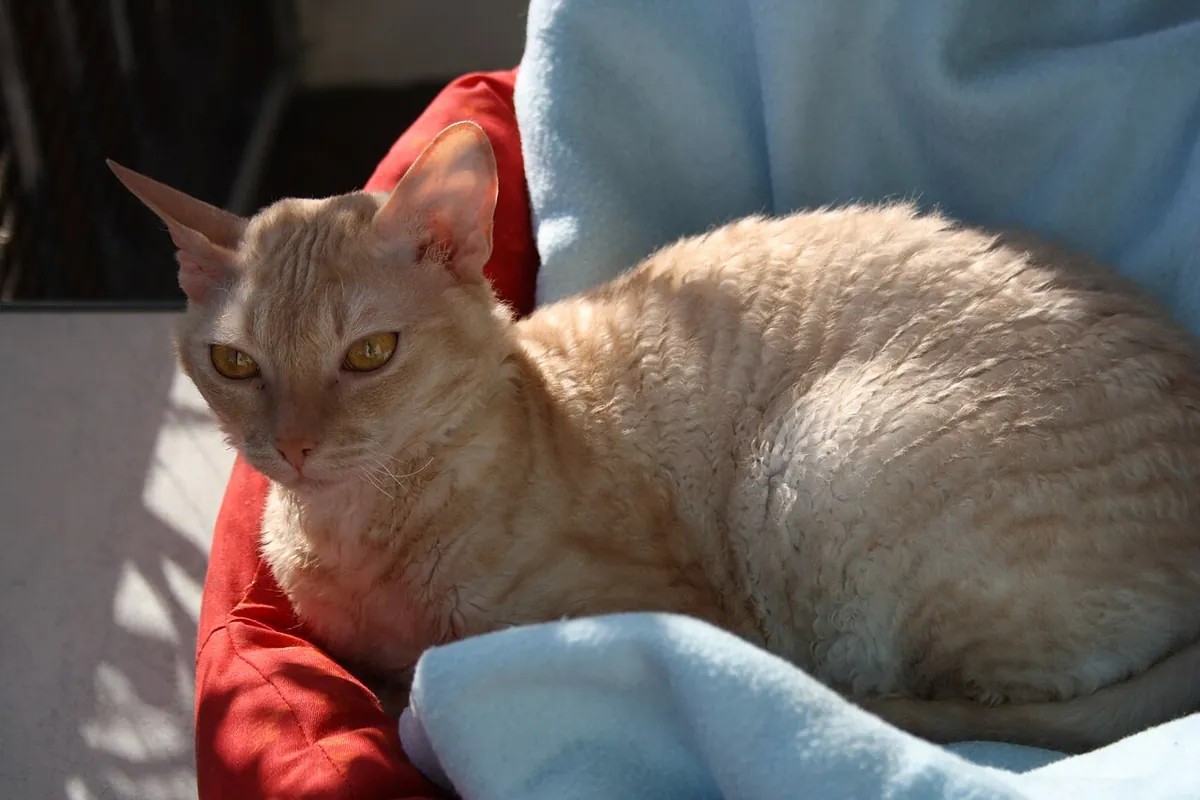
German Rex
Also known as: German Rex cat · Deutsch Rex · German curly cat
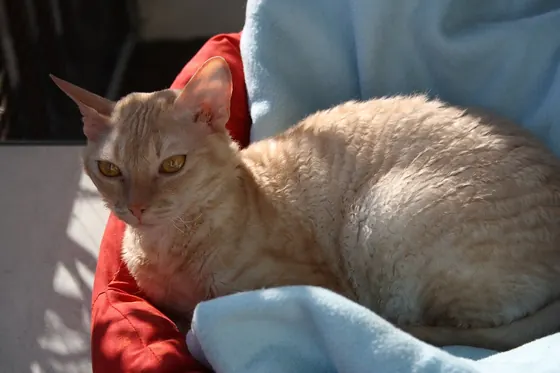
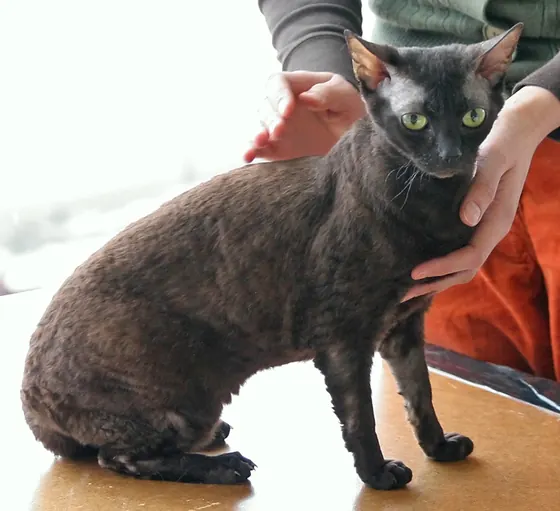
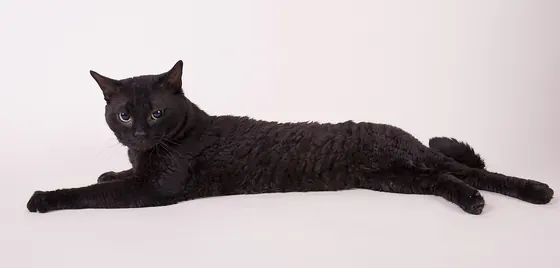
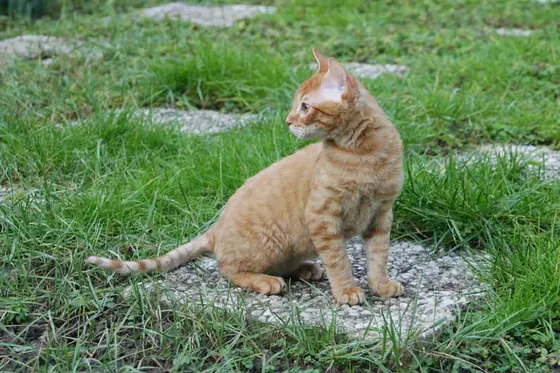
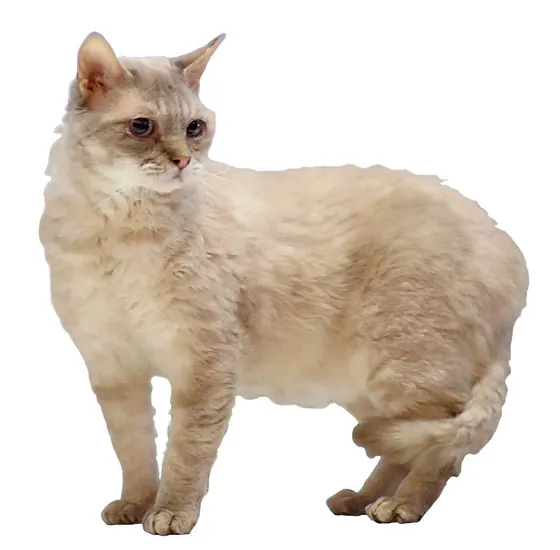
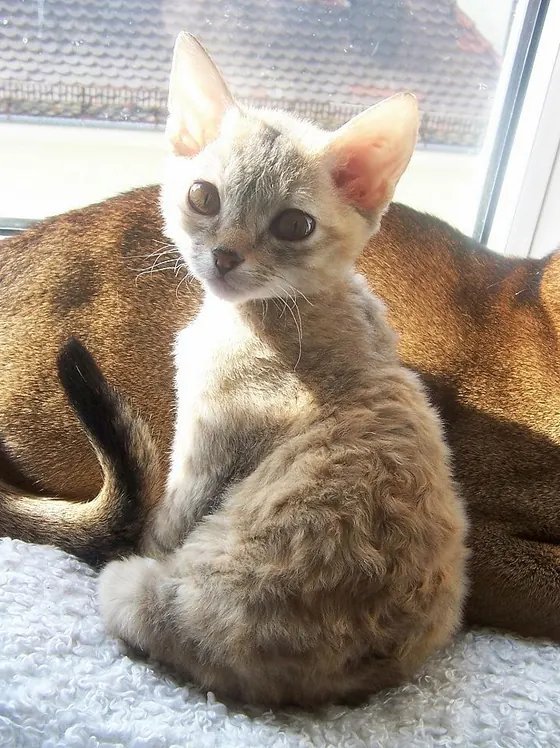
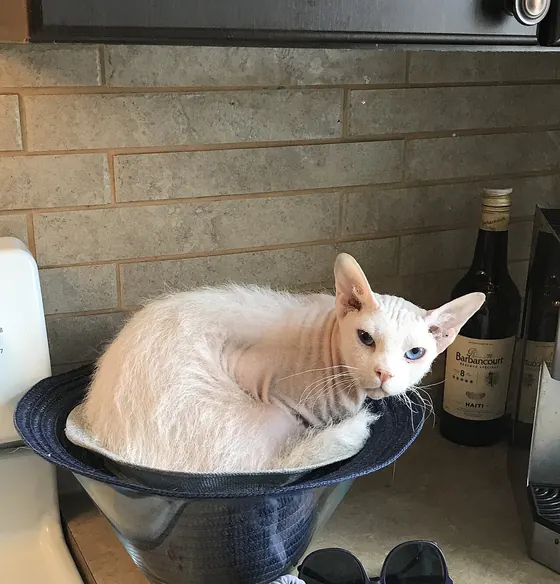
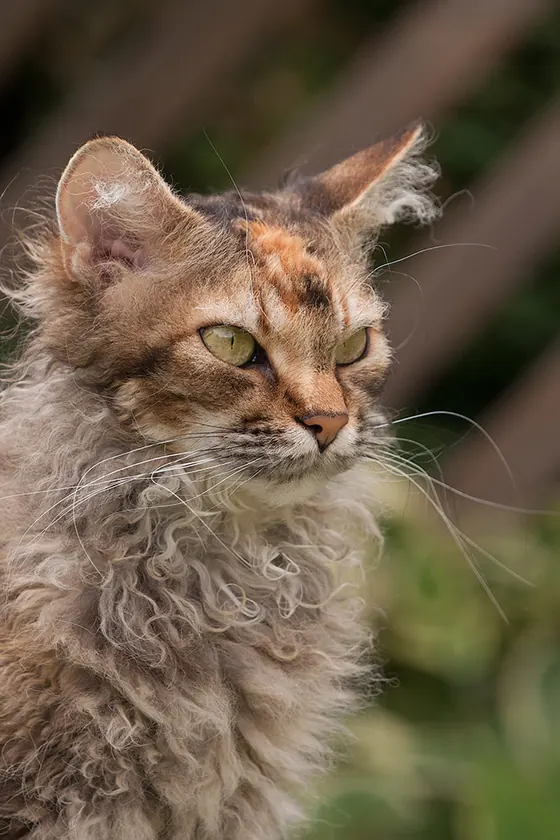
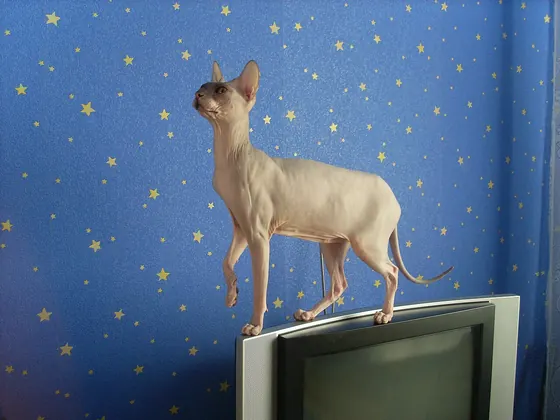
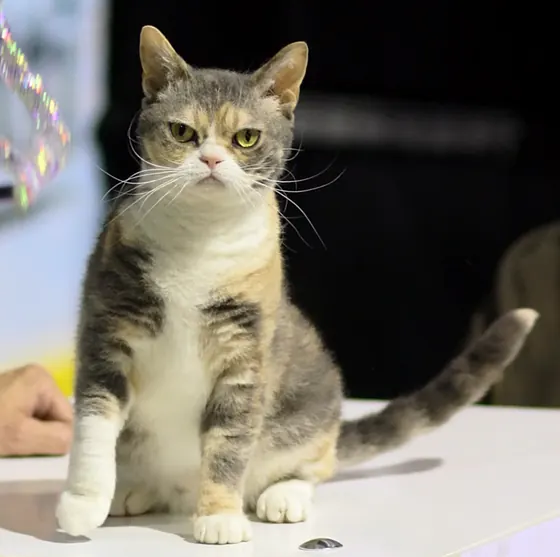
Photos: Grx-vd-huettenwerken (Public domain) · Heikki Siltala (CC BY 3.0) · Bebopscrx (CC BY-SA 3.0) · M.Gerver (CC BY-SA 3.0) · Desaix83, d'après le travail d'Heikki Siltala (CC BY 3.0), via Wikimedia Commons.
Breed profile
* An estimate for Spain in 2026 (food, litter, vet and insurance), based on the size, grooming and health needs of the breed, not on measured costs of individual cats.
What it is like
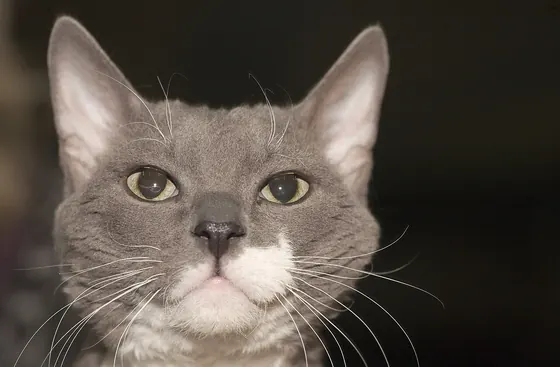
In the summer of 1951, Dr Rose Scheuer-Karpin spotted a curly-coated black female in the garden of the Hufeland hospital, in Berlin's Buch district, which the staff had known since 1947. She named her Lämmchen, “little lamb”, and suspected a mutation. She was right: the first curly kittens from her breeding were born in 1957, and all of today's German Rex descend from her. The gene is recessive and at the same location as the Cornish Rex's, but the German is sturdier, with a body similar to the European Shorthair, a round head, prominent cheeks and large ears. Its coat is short, silky and wavy. In character it is affectionate, lively and clever, and very playful.
Temperament
Care
No stiff brushes: a soft grooming glove or your hand is enough, and over-brushing undoes the curl. The odd bath if the skin is greasy. Clean its ears regularly. Its coat gives little warmth, so it appreciates warm beds and should be protected from strong sun. Daily play and company: it copes badly with long periods alone.
Health
A generally healthy breed. As in other rex breeds, there may be thinly haired patches and the skin is more prone to sunburn and dermatitis. The population is small, so choose breeders who keep inbreeding in check. Annual check-up and blood tests from the age of seven.
Fun facts
Lämmchen means “little lamb” in German, because of her curly coat.
Its curl gene is the same as the Cornish Rex's, and its descendants were used to add genetic variety to that breed.
In the 1930s, near Königsberg, a curly cat called Munk had already attracted attention, but he is not considered an ancestor of the breed.
For years the breed depended almost entirely on a single East German cattery, vom Grund.
Frequently asked questions
How big does a German Rex get?
An adult German Rex usually weighs 3–5 kg (7–11 lb) and stands about 23–28 cm (9–11 in) at the shoulder, which makes it a medium cat.
How long does a German Rex live?
Its usual life expectancy is 12–16 years. Living indoors, being neutered and having regular vet check-ups make the biggest difference.
Is the German Rex hypoallergenic?
No. It produces the usual cat allergens. If someone at home is allergic, spend time with the breed before deciding and talk to an allergist.
Is the German Rex good with children?
Usually yes: it tends to be patient and sociable with children. As with any cat, teach children to let it walk away when it has had enough.
How much play does a German Rex need?
As a guide, 30 min of play a day. Its activity score is 4 out of 5: short daily play sessions with a wand toy work better than one long one.
Similar breeds
All breeds A to Z Cost calculator (Spanish) Food portions (Spanish)