
My cat follows me everywhere: clingy cat or a problem?
The idea of the independent cat that does not care about anything is largely a myth. Many cats become deeply attached to their people. A cat following you to the bathroom is usually just that: attachment. But in some cases it is distress, and in others it is a sign that something about its health has changed.
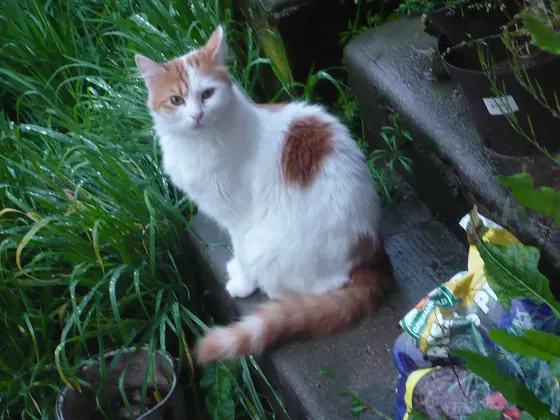
The myth of the independent cat
Cats have a reputation for being solitary and aloof, but research in recent years says otherwise: cats form bonds with their people, and in attachment tests similar to those used with babies and dogs, a good share of cats show secure attachment to their carer, feeling relaxed enough to explore. If anything, cats are socially flexible: they can live alone, but many seek out company and enjoy it. A cat that follows you from room to room, sits beside you while you work or waits for you at the door is neither strange nor doing anything wrong. It is simply a cat that has chosen you as its point of reference.
Why some cats are clingier than others
Several things play a part. Genetics and breed: the Siamese, Burmese, Oriental, Sphynx, Ragdoll and Abyssinian are known, with good reason, for seeking out their people a lot, and the father's temperament influences how sociable a kitten turns out. Early history: kittens weaned very young or bottle-reared tend to be more dependent on humans. Lifestyle: an indoor cat that lives alone and whose only source of stimulation is you will naturally be focused on you. And learning: if every time it follows you it gets strokes, food or attention, it learns that following you is worth it. None of these causes is a problem in itself.
Why it follows you to the bathroom
It is the most frequently asked question, and there are several explanations at once. A closed door is a piece of territory the cat cannot get into, and that unsettles many cats. The bathroom is also an interesting place: cool tiles, dripping taps, towels and a strong concentration of your scent. And it is one of the few moments when you are sitting still, a perfect opportunity to get some fuss. There is no need to correct it. If it bothers you, you can close the door and simply ignore the scratching and meowing, consistently, so it does not learn that persistence works. But if you do not mind, there is no reason to stop it.
When attachment becomes anxiety
The difference lies in what happens when you are not there. An attached cat seeks you out when you are home and copes well when you leave. A cat with a separation-related problem struggles when left alone, and shows it in various ways: it meows a lot when you leave or while you are out, as neighbours or a camera can confirm; it pees or poos outside the litter tray, often on your bed or your clothes; it overgrooms to the point of bald patches, vomits or stops eating while you are away; it breaks things; or it greets you with over-the-top excitement when you return. These problems do exist in cats and are more common than was once thought. If you recognise several of these signs, talk to your vet.
If it is a sudden change, think about health
If a cat that used to be fairly independent suddenly becomes clingy, or a cat that always followed you now does it differently, meowing or asking for food non-stop, consider a medical cause. In older cats, hyperthyroidism causes hunger, restlessness and demands for attention; loss of sight or hearing and cognitive decline make them seek out their person more as a reference point; and pain can make them seek company or, on the contrary, hide. Diabetes and kidney disease also change behaviour. And in an unspayed female, heat makes her extraordinarily affectionate and insistent. With any abrupt change in behaviour, the first visit is to the vet.
How to build independence without withdrawing affection
If the attachment is so intense that the cat struggles while you are away, the answer is not to suddenly ignore it, because that makes it feel even less secure. The idea is that its world should not revolve around you alone. Offer activities it can do without you: puzzle feeders, rotated toys, boxes, scratching posts, high shelves and a good spot at the window. Give it quality attention at predictable times, with play sessions at set hours, rather than responding to every demand. Reward the times it is calm and doing its own thing, not only when it seeks you out. And make your departures boring: no big goodbyes or euphoric reunions, which heighten the contrast between being with you and being alone.
Working on absences gradually
If your cat gets distressed when you leave, it helps to practise short absences that you gradually extend. The cues that you are leaving, such as picking up your keys or putting on your coat or rucksack, can be made neutral by doing them many times without going out, so they stop signalling something bad. When you go, give it something good that it only gets at that moment, such as a puzzle toy with part of its food or a small portion of wet food. Start with outings of a few minutes and lengthen them as it copes. A feline pheromone diffuser, which in Spain costs around €25 to €35 with its refill, can bring some calm to some cats, although it does not work miracles on its own.
Does it need another cat?
It is the solution many people consider, and sometimes it works, but not always. A second cat can provide company and activity for a sociable cat that gets bored, especially if it is young and you find another with a similar character and energy level. But it does not cure anxiety rooted in the bond with you, and for some cats a newcomer is a source of stress, not company. If you are considering it, be honest about how your cat has got on with other cats, bear in mind you will need more litter trays, more food bowls and more space, and make a slow introduction, over weeks. A cat that does not want company will be better off alone with more enrichment.
Enjoy it: it is a privilege
If your cat follows you, sleeps with you, waits for you at the door and lies on your keyboard while you work, but stays calm when you leave, eats well and uses the litter tray normally, you do not have a problem: you have a cat that is very close to you. There is nothing to correct or worry about. The only important thing is that its wellbeing should not depend solely on your presence, so make sure it has a rich environment for the times you are out. And if you ever need to travel, arrange carefully who will look after it, because strongly attached cats are the ones that cope worst with change: a sitter who comes to your home is usually a better option than a cattery.
A cat following you everywhere is usually just attachment, and cats genuinely feel it. It is only a problem if it struggles when left alone (meowing, peeing on your bed, overgrooming, not eating) or if the change is sudden, which means ruling out medical causes. Build its independence with enrichment and routines, not by abruptly withdrawing affection.
Educational content from Michipedia, translated from the Spanish original. It does not replace the advice of a vet or a feline behaviour specialist. Every cat is an individual.