
Why do cats have whiskers? Everything you need to know about vibrissae
Cats have whiskers because they are sensors, not decoration. Known as vibrissae, they are touch-sensitive hairs wired to a huge number of nerves that tell the cat about its surroundings, air currents and anything too close to see clearly. That is why they should never be cut.
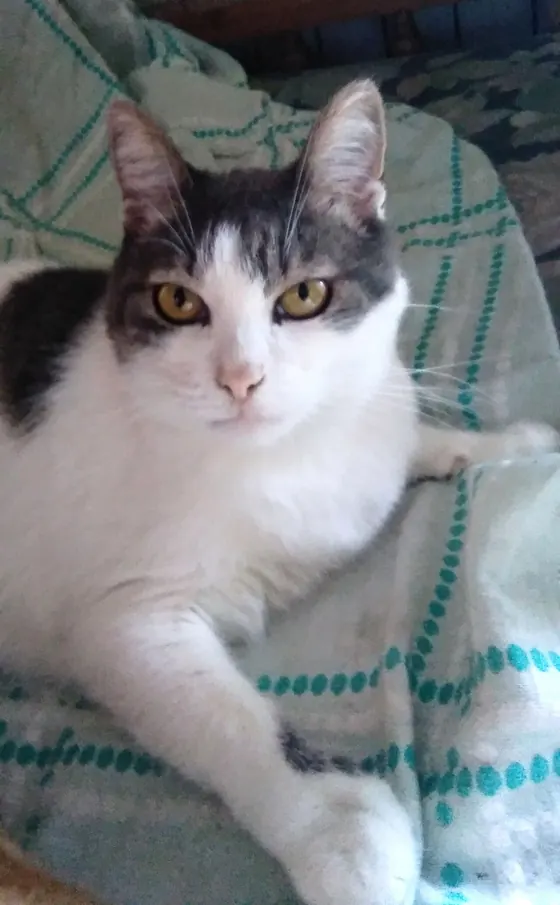
Not ordinary hairs
Vibrissae are much thicker, stiffer and longer than the hairs on the rest of the body, and they are rooted deeper in the skin, in follicles surrounded by blood vessels and a great many nerve endings. Any brush or vibration at the tip of a whisker is transmitted, amplified, to the root and from there to the brain, where a considerable part of the area that processes touch is devoted to them. The whisker itself feels nothing, just like our hair; what feels is the root when the whisker moves. They work like a long-range antenna that tells the cat what it is touching before its face actually makes contact.
How many it has and where
The most visible whiskers are the ones on the muzzle, the mystacial vibrissae, which usually number about 24, roughly 12 on each side, arranged in four rows that the cat can move forwards or backwards independently. But they are not the only ones. It has vibrissae above the eyes, which act as a trigger to close the eyelid if something comes close, on the cheeks, on the chin and, less well known, on the back of the front legs near the wrist: these are the carpal vibrissae, which help it feel the prey it is holding. The exact number varies slightly from cat to cat.
What it uses them for
A cat uses its whiskers to find its way in the dark and among obstacles, sensing nearby objects and even the air currents that bounce off them. It uses them for hunting: when it has prey right under its nose, too close to focus on with its eyes, it pushes its whiskers forward and wraps them around it to work out exactly where it is and bite in just the right place. They also help it judge whether it will fit through a gap: the muzzle whiskers span roughly the width of its head and body and give it a reference before it squeezes in, although in an overweight cat that reference fails, because whiskers do not put on weight.
Whiskers and kittens
Kittens are born with their eyes closed and their ears barely working, but they already have whiskers, and these are among their first tools for finding their way. With them and their sense of smell, they find their mother and a teat in the first hours of life. As they grow, they learn to use them to explore, and within a few weeks they are already pushing them forward when something catches their interest. That is why it is especially important never to cut a kitten’s whiskers, for example while trying to trim the fur on its face or as part of a children’s game: you would be taking away a key aid just when it is learning to get around in the world. If an orphaned kitten’s whiskers get stuck together with milk during bottle-feeding, simply clean them with a damp, lukewarm gauze pad.
Whiskers talk too
Whisker position is part of a cat’s body language, and it is worth learning to read it along with the ears, eyes and tail. A relaxed cat holds its whiskers out to the sides, loose, in a neutral position. When something interests it, such as a toy or prey, it pushes them forward and fans them out. When it is frightened or feels threatened, it flattens them back against its cheeks to protect them and make itself smaller. Whiskers pinned back, with ears turned sideways and dilated pupils, are a clear sign that the cat is having a hard time and should be given some space.
Why you should never cut them
Cutting a cat’s whiskers does not hurt at the time, because the hair has no nerves, but it leaves the cat without one of its navigation tools until they grow back. A cat without whiskers can become disoriented, bump into things, misjudge gaps and be more nervous and insecure. Nor should they be plucked or pulled, because the root is very sensitive and that does hurt. Sometimes, when long-haired cats are groomed or mats are cut out near the face, the whiskers get trimmed by accident; it is worth mentioning this to the groomer so that it does not happen. There is no aesthetic or hygiene reason to cut them.
Is it normal for them to fall out?
Yes. Vibrissae are renewed like the rest of the coat, though more slowly: every so often one falls out and another grows in its place, so finding a loose whisker on the floor or in its bed is normal. What is not normal is losing many at once, or whiskers that break easily or grow brittle, because this can point to a skin problem, such as a fungal infection or an allergy, or to a nutritional one. Some rex breeds, such as the Devon Rex and the Cornish Rex, and sphynx cats have curly, short and fragile whiskers, or hardly any at all, because of the genetics of their coat; in them this is to be expected.
So-called whisker fatigue
In recent years the idea of whisker fatigue has caught on: the notion that narrow, deep bowls, by brushing against the vibrissae with every mouthful, overload the cat’s senses and put it off its food. It is a logical idea, but the scientific evidence is thin. A study by Slovak and Foster in the Journal of Feline Medicine and Surgery (published online in 2020) compared, in 40 indoor cats, their usual bowl with a flat dish designed not to touch the whiskers: it found no difference in how much they ate, how long they took or how much food they spilled, although when given the choice, just over half preferred the flat dish. The sensible conclusion is simple: a wide, shallow bowl costs nothing and some cats find it more comfortable, especially if they scoop food out of the bowl with a paw or only eat from the middle.
Care: next to none
Whiskers need no special care: they are not brushed, trimmed or washed. Just do not cut them, do not pull them and choose wide food and water bowls that do not squash them. If your cat scratches its face a lot, has scabs or sores around the whisker area, or suddenly loses a lot of vibrissae, a visit to the vet is in order to rule out skin problems or dental pain. And if you ever wonder how your cat knows it will fit in that box, now you have the answer: it measured it with its whiskers before climbing in.
Cat whiskers are vibrissae, sensory hairs with nerve-packed roots: about 24 on the muzzle, plus others above the eyes, on the cheeks, on the chin and behind the front legs. They help the cat find its way, measure gaps, sense air currents and catch prey it cannot focus on. They are renewed naturally and should never be cut.
Educational content from Michipedia, translated from the Spanish original. It does not replace the advice of a vet or a feline behaviour specialist. Every cat is an individual.