
Lykoi
Also known as: Lykoi cat · Werewolf cat · Wolf cat · Wolfcat
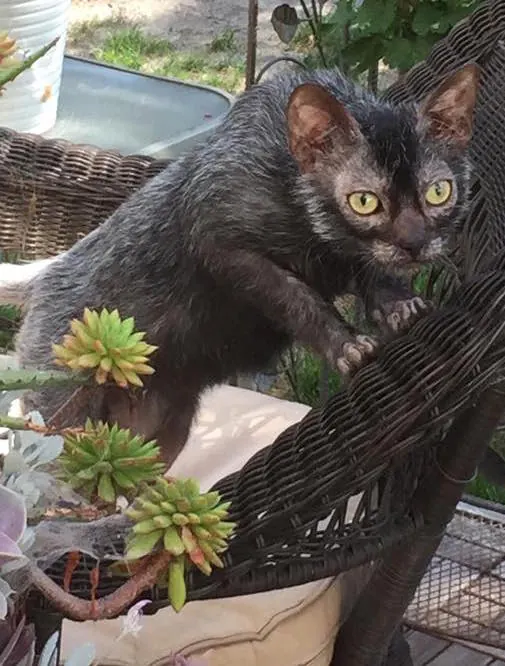
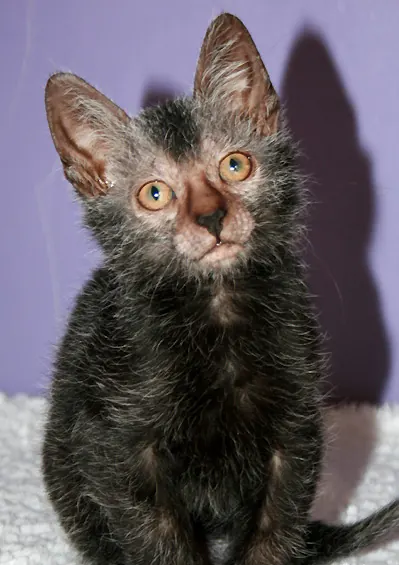
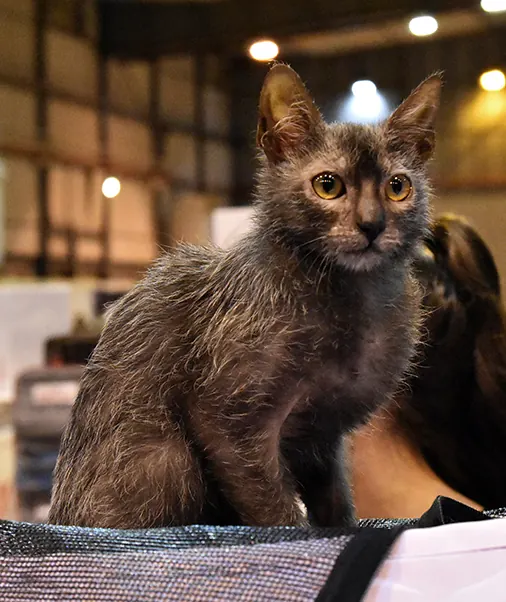
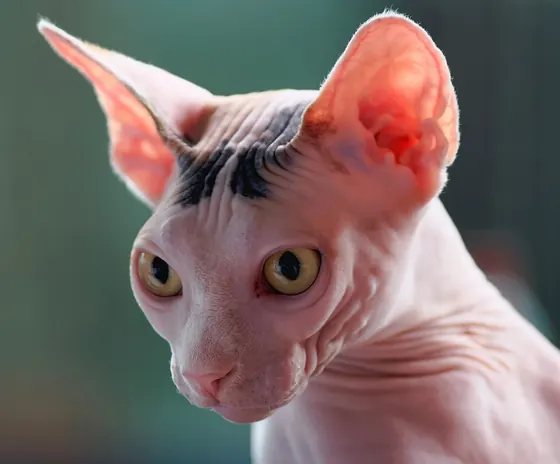
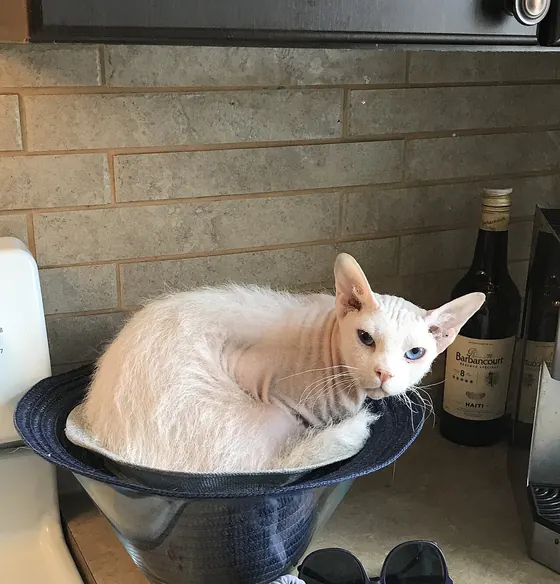
Photos: steptacular (CC BY-SA 4.0) · Christine Auverdin Boulanger (CC BY-SA 4.0), via Wikimedia Commons.
Breed profile
* An estimate for Spain in 2026 (food, litter, vet and insurance), based on the size, grooming and health needs of the breed, not on measured costs of individual cats.
What it is like
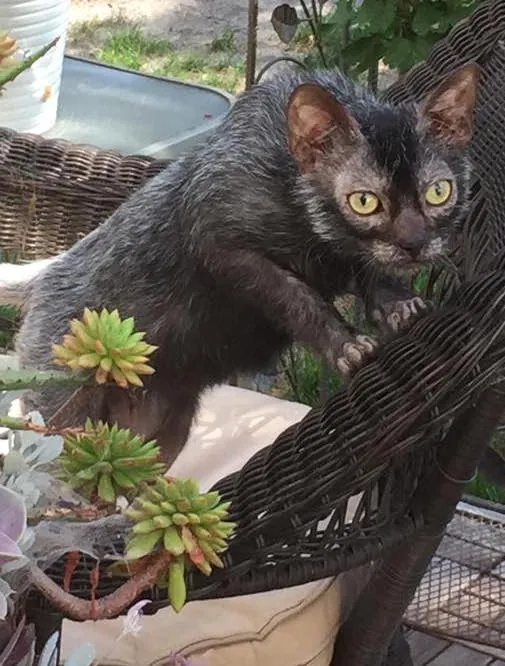
It is a natural mutation that appeared in feral cats in the United States. Around 2010, the vet Johnny Gobble, his wife Brittney and the breeder Patti Thomas brought together kittens from two unrelated litters with an odd coat: sparse, mixed with white and missing around the eyes, muzzle and ears. Before breeding, vets and dermatologists examined them to rule out ringworm, deficiencies or disease: the cause was genetic. That werewolf look gave it its name, which comes from the Greek for “wolves”. It is a curious, hunting, very active cat, affectionate with its family and sometimes wary of strangers at first.
Temperament
Care
It moults dramatically: it can go almost bald for a while and then grow its coat back. It does not need heavy brushing, but its hairless areas need protecting from sun and cold. Regular ear cleaning. Daily hunting play. It is still very rare: be wary of cheap adverts, because an ordinary cat with hair loss is not a Lykoi.
Health
A very young breed with few cats. Initial studies found no heart or skin problems associated with the gene, but long-term information is lacking. Risks: sunburn, dermatitis and inbreeding due to the small population. Routine vet check-ups and blood tests.
Fun facts
“Lykoi” means “wolves” in Greek.
The first ones were studied by vets to make sure their look was not caused by disease.
Its coat changes a great deal over the year: it can go from almost bald to fairly well covered.
Its roan coat, with white hairs mixed in with black, is what gives it its wolfish air.
Frequently asked questions
How big does a Lykoi get?
An adult Lykoi usually weighs 2.5–4.5 kg (6–10 lb) and stands about 20–25 cm (8–10 in) at the shoulder, which makes it a small cat.
How long does a Lykoi live?
Its usual life expectancy is 12–15 years. Living indoors, being neutered and having regular vet check-ups make the biggest difference.
Is the Lykoi hypoallergenic?
No. It produces the usual cat allergens. If someone at home is allergic, spend time with the breed before deciding and talk to an allergist.
Is the Lykoi good with children?
Usually yes: it tends to be patient and sociable with children. As with any cat, teach children to let it walk away when it has had enough.
How much play does a Lykoi need?
As a guide, 40 min of play a day. Its activity score is 4 out of 5: short daily play sessions with a wand toy work better than one long one.
Similar breeds
All breeds A to Z Cost calculator (Spanish) Food portions (Spanish)