
Ukrainian Levkoy
Also known as: Levkoy · Ukrainian Levkoy cat · Ukrainian Sphynx · Ukrainian fold
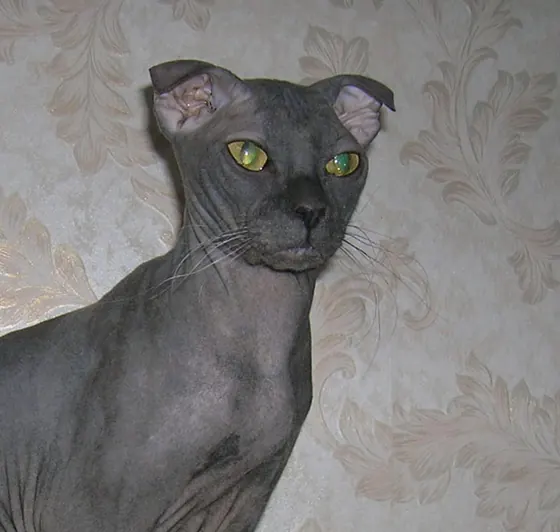
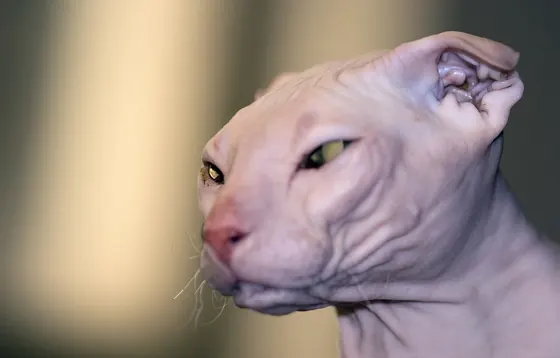
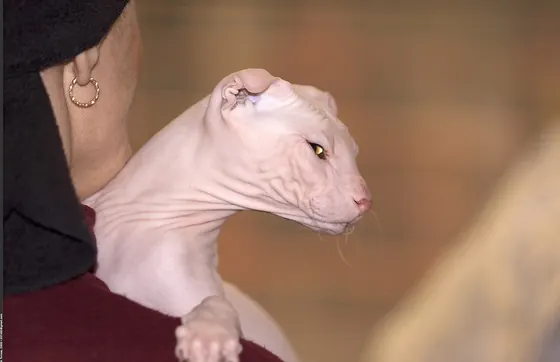
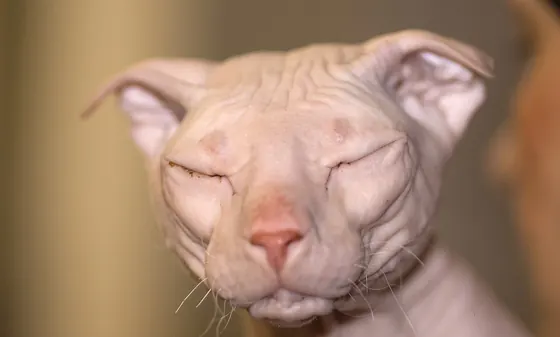
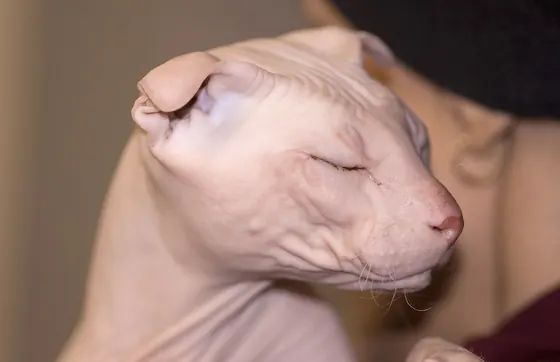
Photos: Alena Ivanchuk (CC BY-SA 3.0) · Nickolas Titkov from Moscow, Russian Federation (CC BY-SA 2.0), via Wikimedia Commons.
Breed profile
* An estimate for Spain in 2026 (food, litter, vet and insurance), based on the size, grooming and health needs of the breed, not on measured costs of individual cats.
What it is like
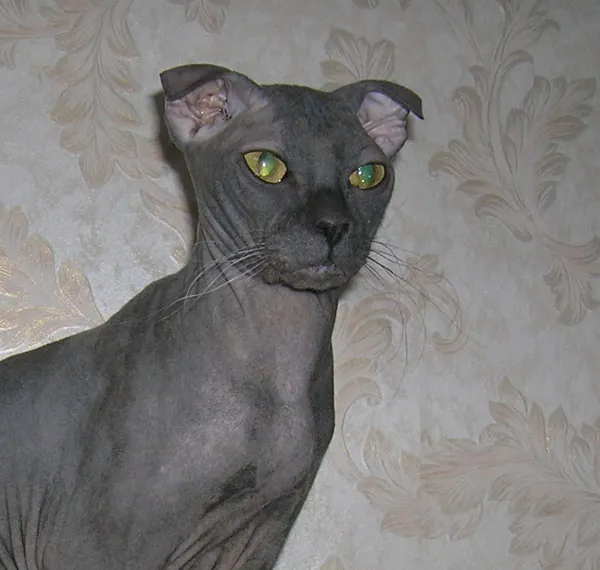
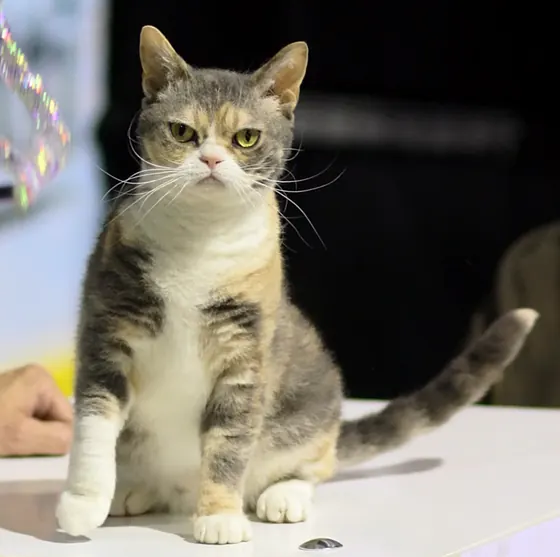
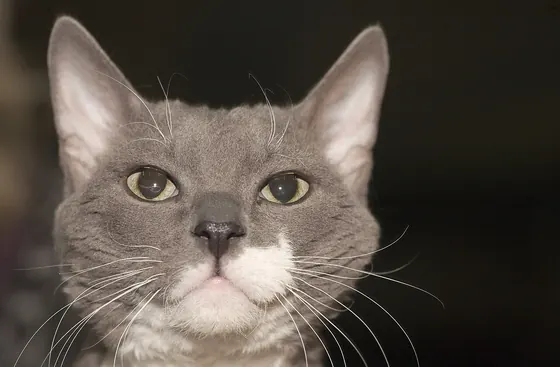
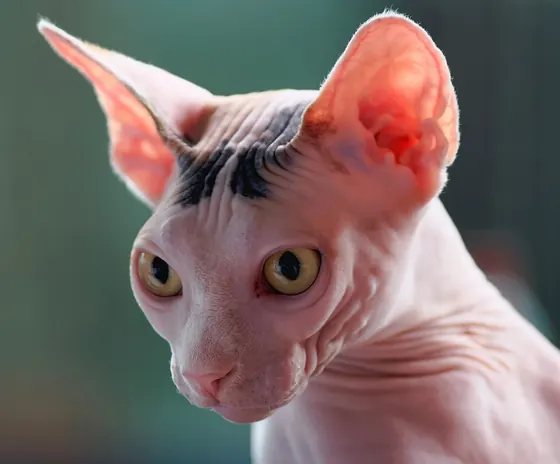
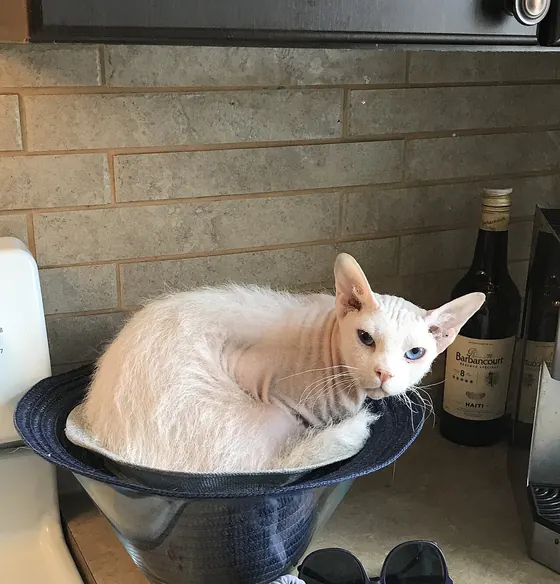
The Ukrainian breeder Elena Biryukova began crossing a Donskoy, the Russian hairless cat, with a Scottish Fold, the fold-eared cat, in 2004. She called the breed's first cat Levkoy the First, and the name comes from the stock flower, “levkoy” in Ukrainian, whose petals curl like its ears. It is a medium-sized, elongated cat, muscular but slender, with wrinkled skin, an angular head with a stepped profile and large ears with the outer half or third folded forwards and down. Some associations in Ukraine and Russia recognise it, but none of the large international ones (FIFe, CFA, TICA, GCCF). It needs saying plainly: it combines two controversial mutations, and the folded-ear one affects the whole skeleton. In character it is affectionate, clever and very sociable, like the Donskoy.
Temperament
Care
It needs the care of a hairless cat: a warm home, heated beds and clothing in winter; cleaning of the skin with wipes or baths every one or two weeks; ears cleaned gently, without forcing the fold; and protection from the sun, because it burns easily. Watch how it moves: if it struggles to jump, limps or will not let you touch its tail, see your vet.
Health
The gene that folds the ears (Fd) affects cartilage throughout the body and causes osteochondrodysplasia: with two copies, severe bony growths on the legs, lameness and pain; with one copy, milder but common problems. That is why FIFe and the GCCF do not recognise fold-eared breeds, and several places, such as the Netherlands, Scotland, Austria and the Australian state of Victoria, ban breeding fold-eared cats. From the Donskoy it inherits delicate skin, sensitive to cold and sun. Many vets advise against this kind of breeding.
Fun facts
Its name comes from the stock flower, “levkoy” in Ukrainian, whose petals curl like its ears.
The breed's first cat was called Levkoy the First.
About half of each litter is born with straight ears, and those cats are essential: the breeding rule requires one parent to have straight ears.
Males are clearly larger than females.
Frequently asked questions
How big does a Ukrainian Levkoy get?
An adult Ukrainian Levkoy usually weighs 3–5.5 kg (7–12 lb) and stands about 23–28 cm (9–11 in) at the shoulder, which makes it a medium cat.
How long does a Ukrainian Levkoy live?
Its usual life expectancy is 12–15 years. Living indoors, being neutered and having regular vet check-ups make the biggest difference.
Is the Ukrainian Levkoy hypoallergenic?
No. It produces the usual cat allergens. If someone at home is allergic, spend time with the breed before deciding and talk to an allergist.
Is the Ukrainian Levkoy good with children?
Usually yes: it tends to be patient and sociable with children. As with any cat, teach children to let it walk away when it has had enough.
How much play does a Ukrainian Levkoy need?
As a guide, 25 min of play a day. Its activity score is 3 out of 5: short daily play sessions with a wand toy work better than one long one.
Similar breeds
All breeds A to Z Cost calculator (Spanish) Food portions (Spanish)